
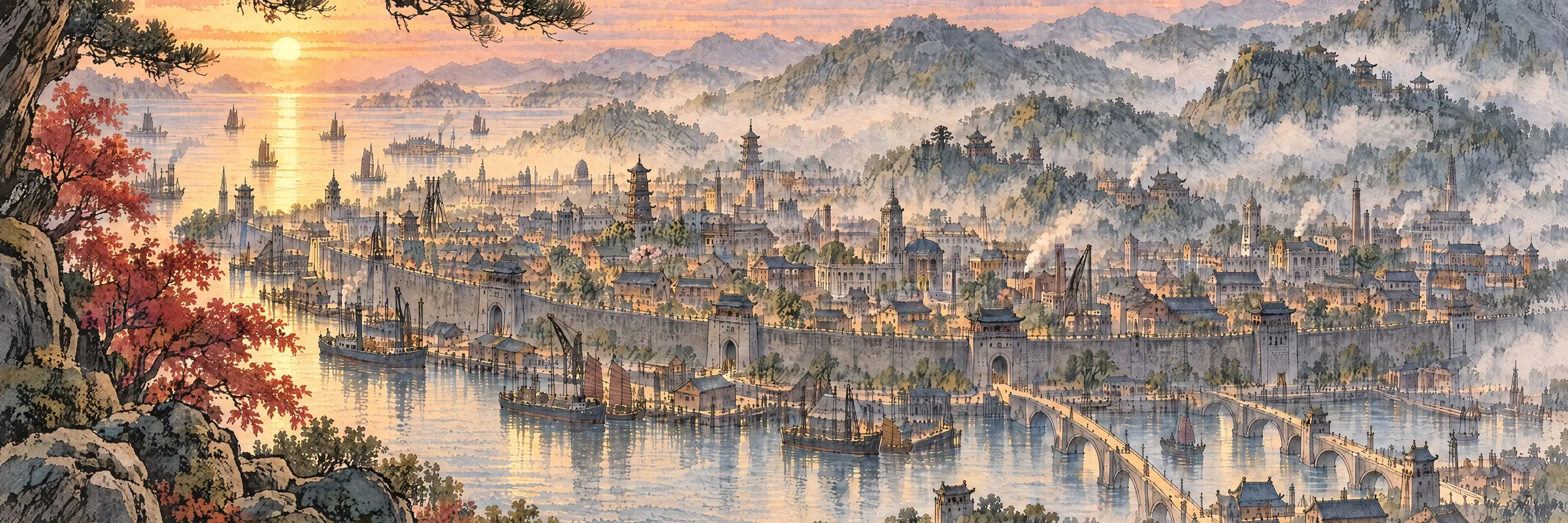
Welcome to the beta. Eleven years have passed since the alpha ended. Characters who lived through those days are older, the Empire around them has changed, and there is a great deal that is new. Here is what has happened, what has been added, and what you might have missed.
事Eleven years
When the Prince surrendered to the Empress, Shirogane did not grow quieter. Its new rulers governed with a harder hand, and more of its people fled across the water into the Empire. Many settled in the towns, and some brought the way of the katana with them. Several cultivators of the Empire have learned it from them.
After the eruption, and the long work of rebuilding that followed, the Empire went through years of great fertility. Fields came back richer than anyone remembered. The plenty brought its own trouble. Poppy farming spread fast, and cheap opium flooded the Empire's ports and towns.
The King of Jīnjiǎ blames the Empress for being too lax. Most people think his anger runs deeper than policy: he lost his son and heir to opium addiction.
That is the Empire your character walks into.
新New in Beta
The Memory Tutorial
The game now has an optional tutorial you can play through upon creating a character. This will take you through your character's childhood from 8 to 15 with difference scenes and scenarios designed to help you learn the different game systems and important lore elements.
Hánxuě Academy: the Winter School
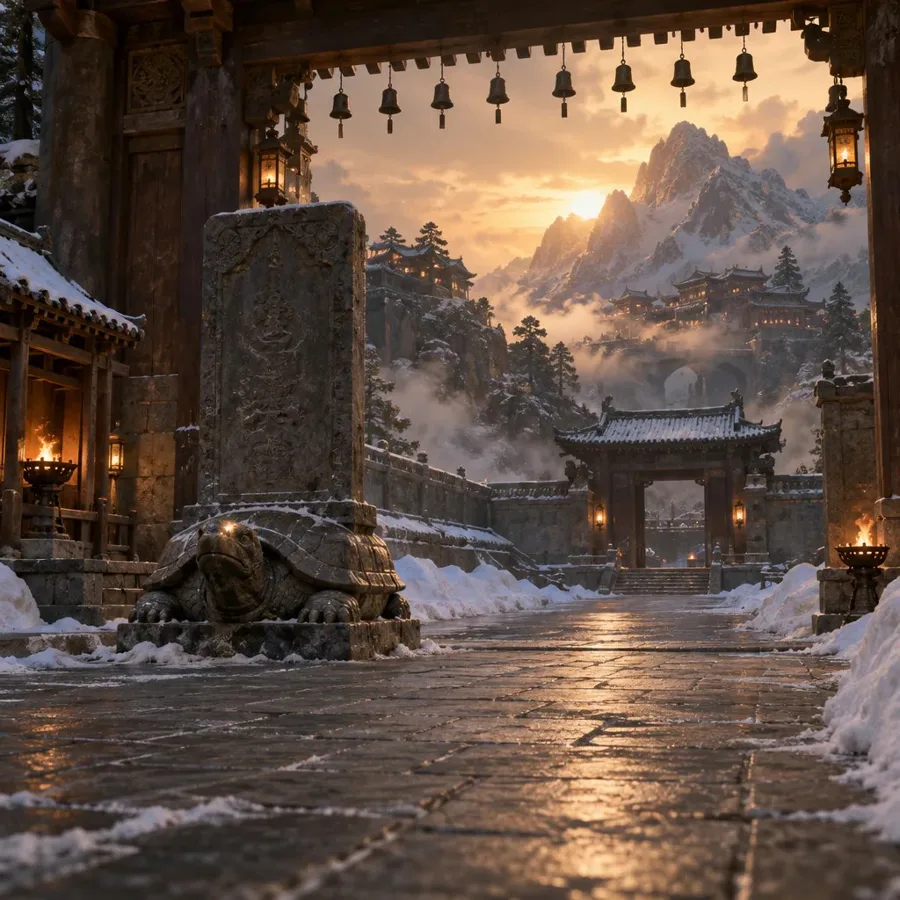
Hánxuě Academy is a noble finishing school in the snows south-west of Fēiyín Dū. Characters from all the Kingdoms regularly board there over winter. Your school self opens in a second tab beside your present self, alongside everyone else from your year. All characters created in the same epoch will be grouped together. You can play your school-self and your adult-self at the same time.
- Regular classes. Masters teach lessons on a timetable: combat lessons and bouts in the sparring rings, arts like the guqin, and sports such as cuju.
- Things to use. Training dummies, archery butts, channeling foci, run walls and plum-blossom posts all respond to
practiceanduse. - School life. Crushes and rivalries, gossip, prize-givings, secret spots, and the odd night sneaking out past the proctors.
- Timeline memories. What happens at school becomes memory. Your present-day character remembers the people they knew there, and those old ties come with them.
Because the game world is generally so spread out, the school offers a much more intimate experience that makes it easier to find other players and get to know other PCs. It also enables people to show how their character has changed since their teenage years.
Use the School Flashback button on your dashboard to go back.
Falling Leaf Style
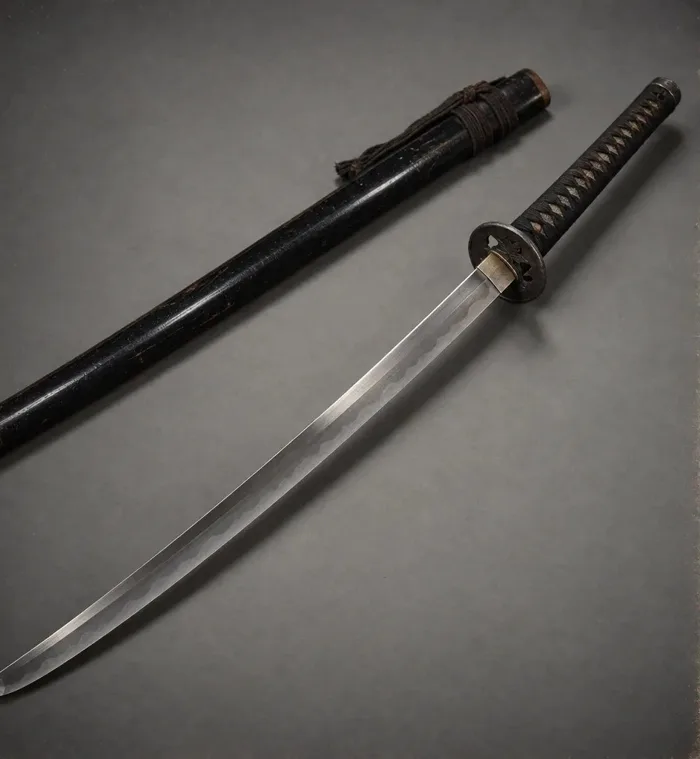
The way of the katana has reached the Empire, and with it a new sword style. Falling Leaf is a duellist's art built on reading one opponent, holding a duel through the round, and a last stand when the fight turns against you. This is the first exotic style introduced to the game.
Manors
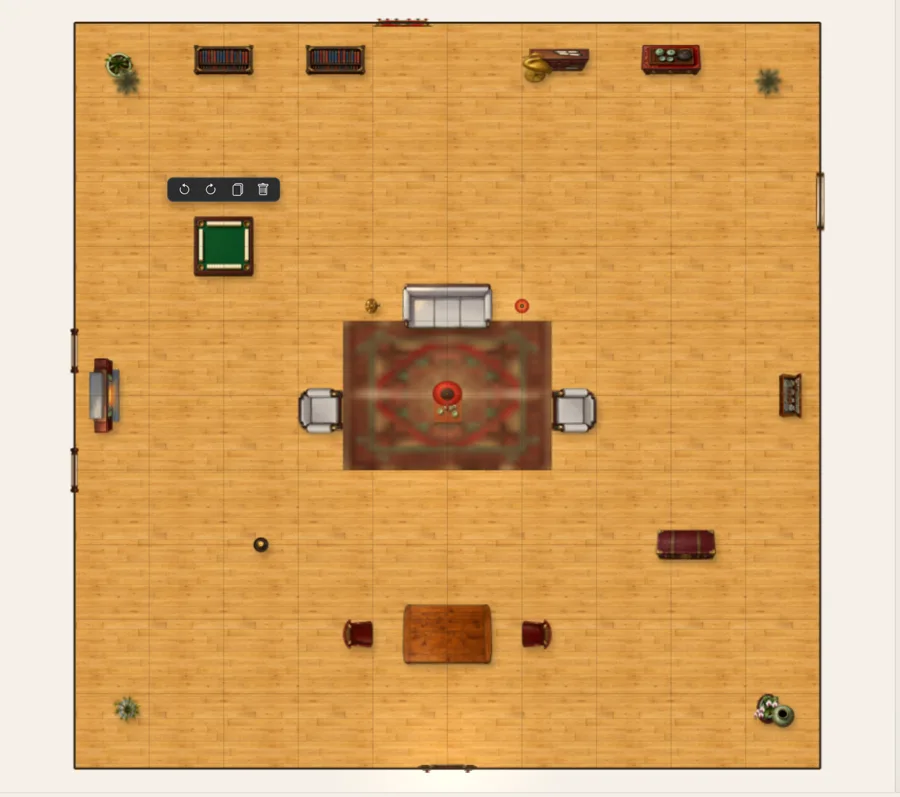
Your family can now build an estate of its own. Manors sit on the Manor Lands, the countryside north and east of Zhūwān, where twenty plots have been surveyed and laid out along the lanes. A manor belongs to the family, not to any one character. Every member can come and go, build, and give the household orders, and the house outlives any one of you.
Everything is paid for in house esteem, your family's standing. It grows whenever anyone in the family gains influence, whether through adventures, charity, feeding the poor or anything else that earns it, and one point of esteem is worth about a Gold Dollar. There is no upkeep and no wages: what you build is yours.
Claiming the land
Walk out to a free plot and type claim plot. For 2,500 esteem you get the land and the first stretch of ground by the lane. Each plot is a 150-foot square divided into a three-by-three grid of 50-foot segments, over four levels: a cellar, the ground floor and two upper storeys. You grow the house a segment at a time:
- a segment beside one you already hold costs 1,000;
- a storey on top of one costs 1,500;
- a cellar beneath one costs 500.
Stairs come with every segment you add above or below. Fully built out, a manor has 36 segments. If your family ever gives up the land, the house is kept as a blueprint and can be raised again on any free plot at no cost.
Build Mode
Rooms are laid out in Build Mode, the graphical editor, opened from the quick actions button. Carve your segments into rooms of any shape: halls, bedrooms, studies, courtyards, up to six outdoor spaces. Rooms on the same floor join wherever they share a wall, so the house flows the way you draw it.
- Surfaces. Choose floors, walls and roofs by the square foot, each in plain, fine or exquisite quality. There are sixteen floors, from packed earth to mother-of-pearl parquet and jade tile, fourteen wall finishes, from papered screens to carved sandalwood and silvered mirror, and ten roofs and ceilings, from thatch to gold leaf.
- Furniture. The catalogue holds nearly 500 pieces of furniture, decorations, plants, doors and windows, almost all with their own art. Most furniture is cheap. For families who want to show off, a treasure tier runs to a Thousand Year Pine, a Jade Mountain and a Solid Gold Crane. Pieces can be made in chosen materials such as silk, ironwood or jade (priced off the live trade market), at a chosen quality, and given names and descriptions of your own.
- Arranging. In the editor, move, rotate, resize and retint anything you own. Set each room's name, the line people see when they walk in, its full description, its lighting and sunshine, and background pictures that can change with the season and the time of day.
- Doors and windows. Twenty-three styles of doorway and window, from a plank door to a moon gate, a jade screen door or a concealed door.
- Storage. Anything you take out goes into storage, not the bin, so you can redecorate freely. If you change your mind within the hour, you get a full refund.
- The view from the lane. Give your manor an exterior picture for passers-by to see.
Special rooms
Any room big enough can be declared a special room with manor declare:
- Kitchen. Make any food or drink you can describe, for your table and your guests.
- Hot spring. A private soak that heals wounds and restores worn-down health, with no admission fee.
- Martial arts library. The family's heirs learn any cultivation style the house already knows at a 75% discount (50% without a library).
- War room. Halves the cost of sending extra House Intelligence agents into the field, and lets anyone you admit see what the house is looking into.
- Prison. Anyone your house takes captive is held here and cannot leave.
- Cultivation gardens. Up to four of them, for growing your own ingredients (below).
- Garage and stable. Bays for motor cars and motorcycles, stalls for horses (below).
Gardens
Each garden holds two to eight beds, depending on its size. Plant common cultivation ingredients like Bitterthread, Ember Berry, Duskbell, Twice-Burning Poppy and Ironveil, or fresh base herbs, and harvest them for pill brewing. Gardens need tending: a bed grows at full speed for two days after you tend it, slows, then stops, and an untended plant dies after a week. Spring and summer are the growing seasons, autumn is slow, and winter almost stops growth. Any family member can plant, tend and harvest.
Household staff
Build quarters, and someone moves in. Staff are a one-off cost in esteem, with no wages, and if one is lost, a replacement arrives in a few days.
- Soldiers, armed with sword, rifle or glaive, follow you and fight beside you on adventures and stealth missions. Encounters are sized to include them, and they can die.
- Agents each cut House Intelligence mission times by 15%, down to half.
- Retinue: a companion, ward, maid or entertainer who keeps you company and plays their part in your scenes. An entertainer will perform on request.
- A chef cooks to order from the kitchen and delivers to you or anyone you name.
- Servants fetch things from your stash, deliver items to people across town, and put things away.
Garages, stables and outings
With a garage or stable, family members can buy their own vehicles from Aldermark Auto Imports and the horse traders. These are priced in Gold Dollars, for families of real means. Cars run from the Brannock Carrier pickup to the Jīnhé Golden Bridge limousine, by way of a Clarion tourer and the Ashcombe Sprite roadster. There are motorcycles, with or without a sidecar, and horses from sturdy steppe ponies to the prized Hànxuè courser.
bringyour car or horse round to the curb, thendriveorrideacross town with your friends aboard. Paint your car, fit plates, put the top down, and take it with you on long journeys by ship or rail.- Horses are raised, not just bought. Feed, groom and turn them out to build your bond, train their speed, stamina, agility and manners, and breed them, at your own stud or someone else's. Foals grow into riding horses over three weeks.
- Outings.
drive aroundtakes a group on a scenic loop of town.ride outtakes a party into the open country around the city on horseback. Choose your gait, steer toward the river, the hills or the woods, and let the weather, season and land around you shape the ride.
Showing it off
- Plaques. Mount an engraved plaque under any trophy or decoration, commemorating an adventure, raid, event or mission your family took part in, for every visitor to read.
- Who comes in. Keep the doors closed to all but family, admit invited guests, or open them to anyone. A visitor log shows who has called.
- Open house.
manor openhousethrows the doors open for a few hours with a note of your own. Anyone can see the list of open houses, richest house first, and drop by.
Player-Owned Shops
A family can now open a shop of its own, no manor needed. If your house has designers among it, people who draw their own clothes, jewellery, bags or blades, you can put their work in a shop window where anyone in the city can buy it.
Taking a lease
Boarded-up shopfronts and rentable shops stand empty across Zhūwān North: one-room shops on the high streets, a row of old herbalists, an eight-room warehouse, even two pagoda towers. Walk into a vacant one and type storefront claim. The whole building is yours. The first lease costs 500 esteem from your house's standing, the second 1,000, and each one after that twice the last. There's no rent. Like a manor, the shop belongs to the family, and any member can run it.
Stocking the shelves
- Your house's own designs. Anything designed by a member of your family can go on the shelves with
storefront stock, up to thirty designs per shop. Everything is made to order, so you never run out and never have to carry stock. - Fair prices. The game prices each piece from its materials and the work that goes into it, so the same design costs the same in any shop. You set what you sell, not what it costs.
- What you earn. A shop doesn't make money. Every sale to another player earns your family a little influence, and with it esteem, so a busy shop slowly builds your house's name. It's a shopfront, not an income.
Staff and fitting out
- Shop hands. Hire up to four named staff, give them a role like counter clerk, and set the hours they work. The shop is always open, but staff bring it to life: they know what's on the shelves, talk to customers and remember who bought what.
- Making it yours. Hang out a sign with
storefront name, and the new name goes up in the directory and on the map. Shops are fitted out from the same catalogue as manors, and pieces move freely between your manor and your shops. Lay floors, panel the walls, choose doors and windows, and in Build Mode name the rooms, write their descriptions and set the lighting and backdrop. - Getting noticed. Once a lease is signed, the shop appears in the city directory, and the Zhūwān Bulletin reports on new shops opening.
Leases run until the years turn over at the next time skip. When that happens, your furnishings go back into the house's storage and the whole shop, layout, staff and shelves, is kept as a plan you can raise again for free on a lot of the same shape.
Patrons
Certain important NPCs will now be more involved in your character's life, Your ambassador, the grand master of your martial school as well as spirits and sect leaders might seek you out or send you messages or dreams based on what you've been up to. They might ask you to do something for them, or give you advice or instruction.
Heartstrings
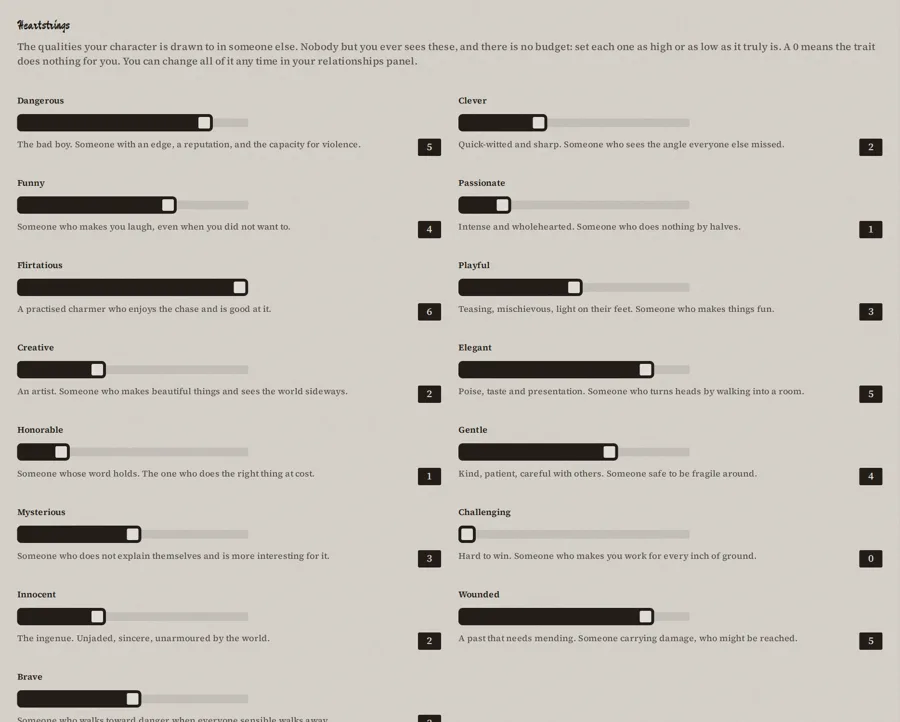
Heartstrings are the qualities your character is drawn to in someone else: dangerous, clever, gentle, elegant, wounded, and more. You set them in character creation, and nobody but you ever sees them.
They shape how chemistry grows between your character and the people they meet. You can change them any time from your relationships panel.
The Society Entrance Carousel
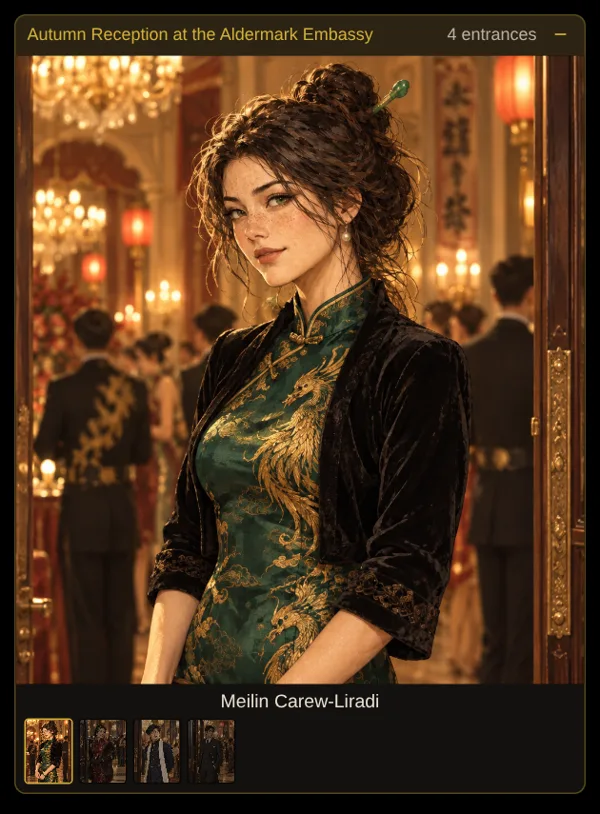
Dress well for a society event and you make an entrance. Arrive in a fine outfit and a portrait of you stepping through the door is painted from what you are wearing.
Everyone at the event sees the entrances in a carousel that takes the minimap's place. Click a portrait to see it full size.
The Zhūwān Bulletin
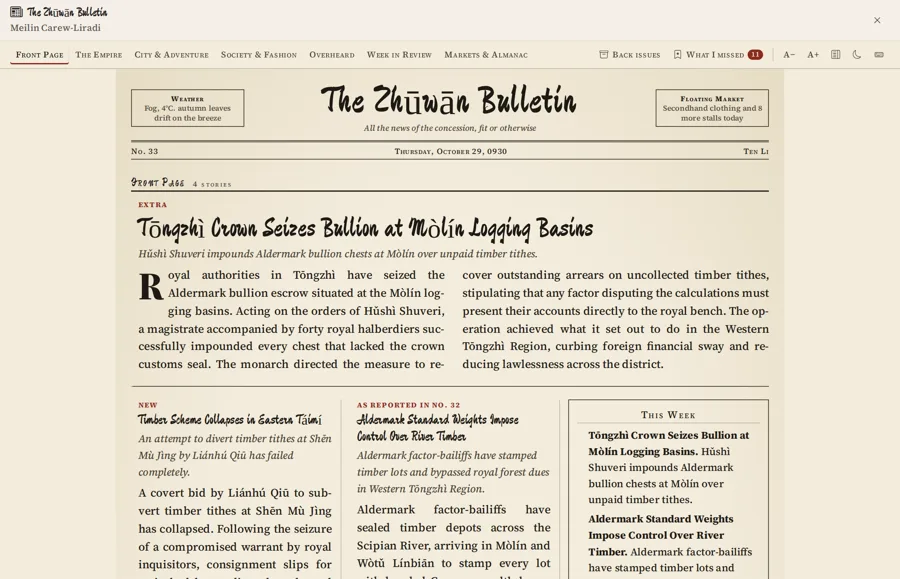
Zhūwān has a daily paper. The Bulletin covers the Empire, the city, society and fashion, markets and the weather, and it carries classifieds. Buy a copy for ten li from a newsboy or at the Bulletin's office on Embassy Street, then read it with paper.
The news is the world's own: what the courts and families do turns into headlines, and NPCs read the paper too. The newsboys and newsgirls will hang around outside embassies, vocally announcing the headlines for today's paper.
Qi Healing and Qi Massage
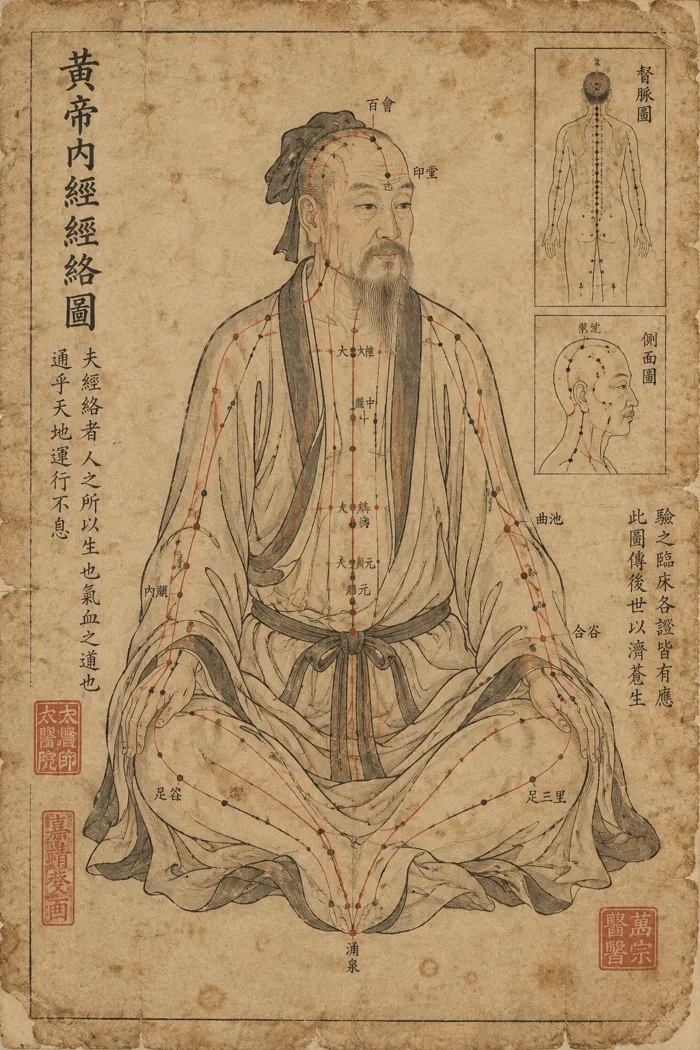
Healing with qi is now a skill you play. With qiheal you work along another character's meridians, finding the right points and treating them through cloth or skin, and a careful treatment heals more.
massage uses the same art outside a fight. A good massage leaves a small buffer against losing maximum health that lasts a day.
補Things you may have missed
These are some of the major changes from Alpha if you haven't played in a while.
Rolls and actions
Rolls now use two twelve-sided dice, stats were doubled, and the dice look like what they are made of: wood, qi crystal and risk stone.
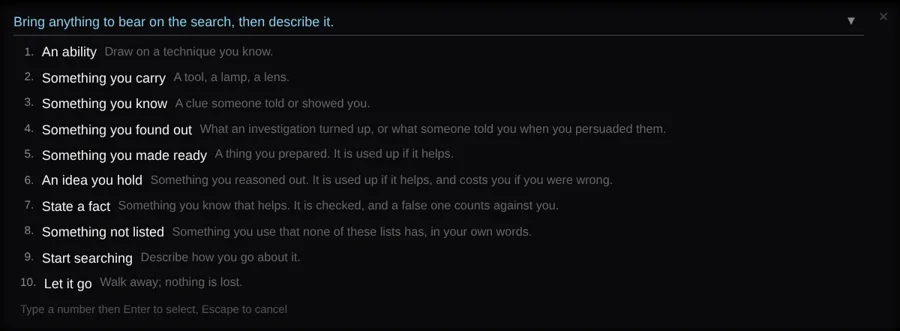
Three new actions work as staged checks: persuade, investigate and infiltrate. You pick a method, bring what helps, and describe what you do. reason lets you form a hypothesis and stake it on a roll, and prepare readies something now to use on a later roll. You can also roll your abilities during roleplay and adventures.
Combat
Fights are animated on the battle map, blow by blow. The ground matters more too: cliffs you can be knocked off, walls you can be slammed into, and things in the room you can use.
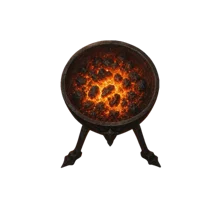 Brazier
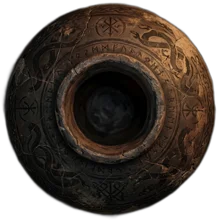 Vase
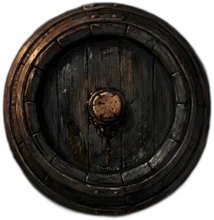 Oil barrel
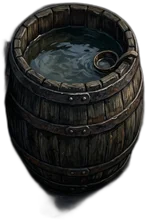 Water barrel
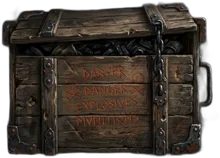 Munitions crate
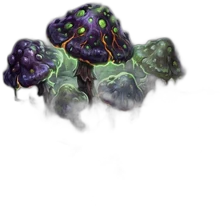 Toxic mushrooms
Kick over a brazier, smash a vase, spill an oil barrel and set it alight, or douse a fire with water. You can also climb onto and ride very large monsters, and two fighters on opposite sides of a foe can land flanking combos.
Adventures and villains
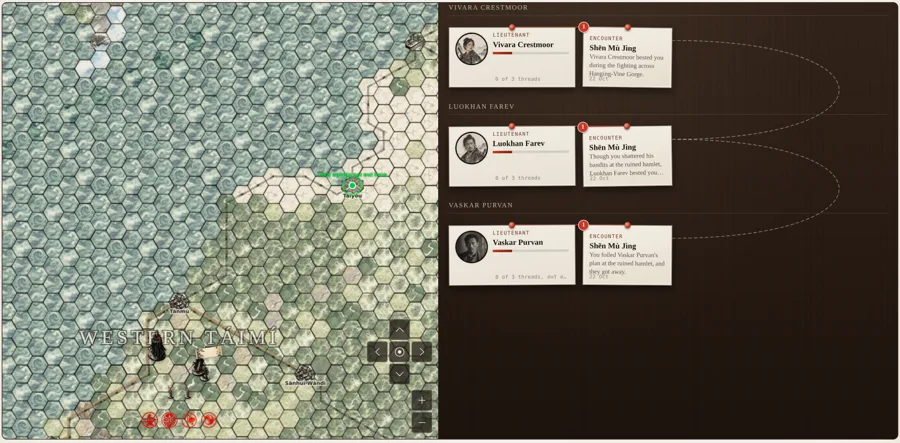
- Write your own adventures. Sketch an outline in the story editor, and the Game Master runs it.
- Branching adventures can end two different ways, depending on what you do.
- Nemesis villains remember you and come back. Their lieutenants leave trails of clues, and you can bring them to a confrontation.
- The dark road. Characters can make villainy pacts of their own.
pauseholds an adventure or activity while you step away.
Raids and threats
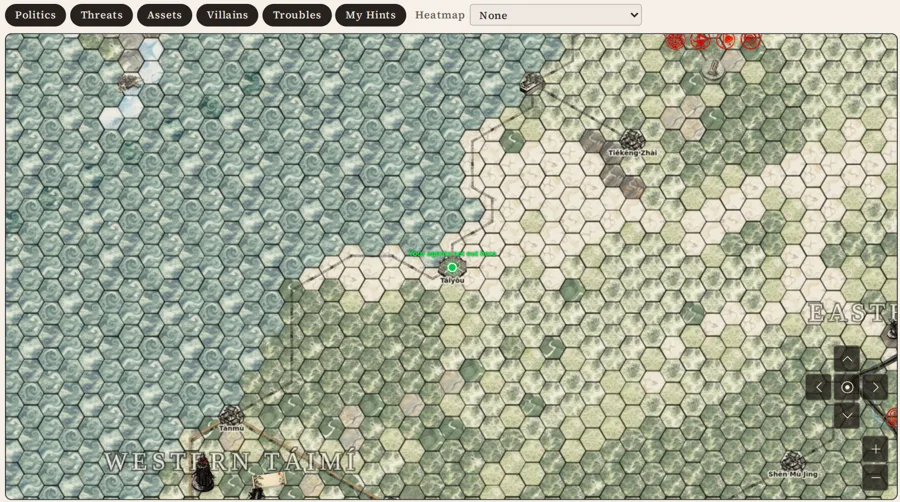
- Kingdom raids pit kingdoms against each other every week.
- Bandit camps grow where crime runs high, and a party can raid them wave by wave.
- Regional threats rise when trouble builds: curses, monsters, fox spirits, restless spirits, disputes to mediate and crooked officials.
Town Protectors
Every town remembers who stood up for it. The character who has done the most for a town is named its Lord or Lady Protector. This isn't an office of state, it's an honour, like the key to the city, and the regard of everyone who lives there.
No one campaigns for it and there's nothing to buy. Every adventure takes place near some town, and every one you see through earns you standing there, weighted by how much your deeds actually mattered. Once you have three adventures behind you near a town and the best record of anyone there, the town names you its Protector. It can happen within an hour of the adventure that tips the balance.
- Holding the seat. Old deeds fade slowly over the years, so a Protector who stops coming round can be overtaken. A rival has to have done a quarter more for the town than the sitting Protector to take the seat from them. When that happens, they inherit the house and you keep the title of Former Protector, which people there remember fondly.
- More than one town. You can protect several towns, but each one is harder to win than the last. Your second needs twice the adventures and twice the record of the next best, your third four times, so there are seats to go round.
- Stepping down.
protector abdicategives the seat back to the town. You can't stand again there until you've done three new adventures near it.
What it brings
- The key to the town. The local paper runs the story, the town's history is rewritten to name you, and everyone in town knows who you are. Officials and shopkeepers treat you as a local hero, and your name carries weight when you persuade or investigate there.
- A house. The town gives you a house of your own, or builds a courtyard house for its Protector if none stands empty. You can decorate it and make it your home. It passes to whoever comes after you.
- A festival. Your birthday becomes a town festival with its own name, on the local calendar and the notice boards.
- Life around you. Townsfolk speak of you with pride. Children play at being the Protector in paper masks. Vendors boast of your custom. After an adventure you led near the town, the tavern or teahouse may put up a clipping or a trophy of it on the wall.
- Word from the magistrate. Every Sunday the magistrate's clerk sends a telegram with the town's news, its politics, coming festivals and what's been happening nearby. When bandits or a regional threat rise nearby, an urgent telegram arrives: people are frightened, and they look to their Protector.
- A statue. When the years turn over at the next time skip, each sitting Protector is raised in stone at a crossroads of their town. Only deeds from the current era count, so every time skip starts the race afresh.
Type protector here in any town to see who holds it, who's in the running, and how far you have to go.
The world

sky: the moon, the stars and the weather, wherever you are.Weather now affects travel, combat and stealth, and look sky shows you the real sky over wherever you stand: sun, moon, clouds and the Empire's own constellations.
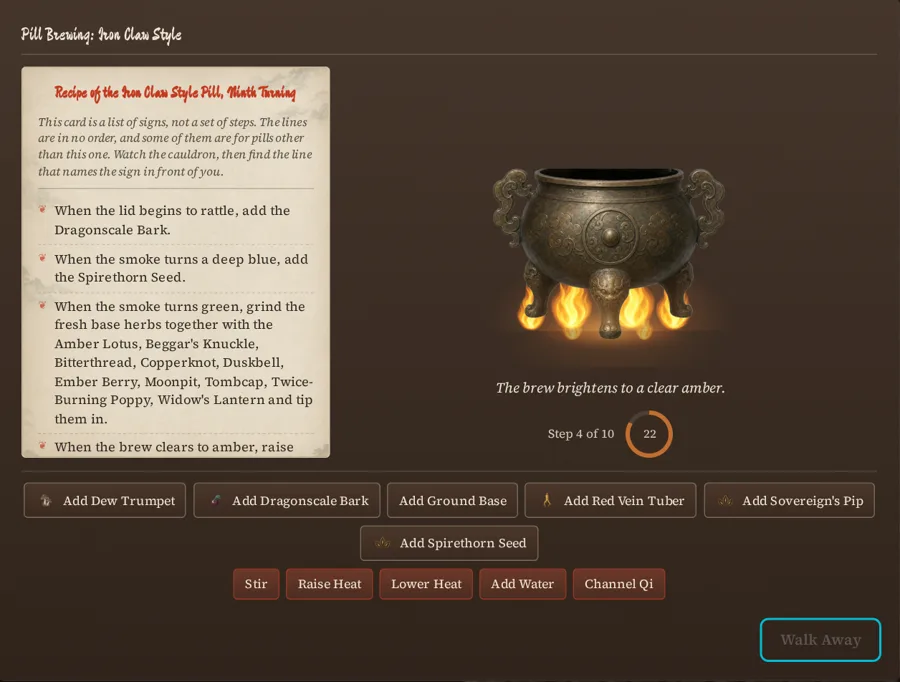
Pill brewing. Cultivation pills are brewed by hand at a cauldron. Watch for each sign, find it on the recipe card, and act before the time runs out. Fresh herbs spoil, and cauldron rooms around the city draw lightning when a pill comes good.
Training equipment. Dummies, archery butts, plum-blossom posts and more stand in the martial schools for anyone to practise on.
Shared pasts. Two players can agree on a history their characters share and bring it into play.
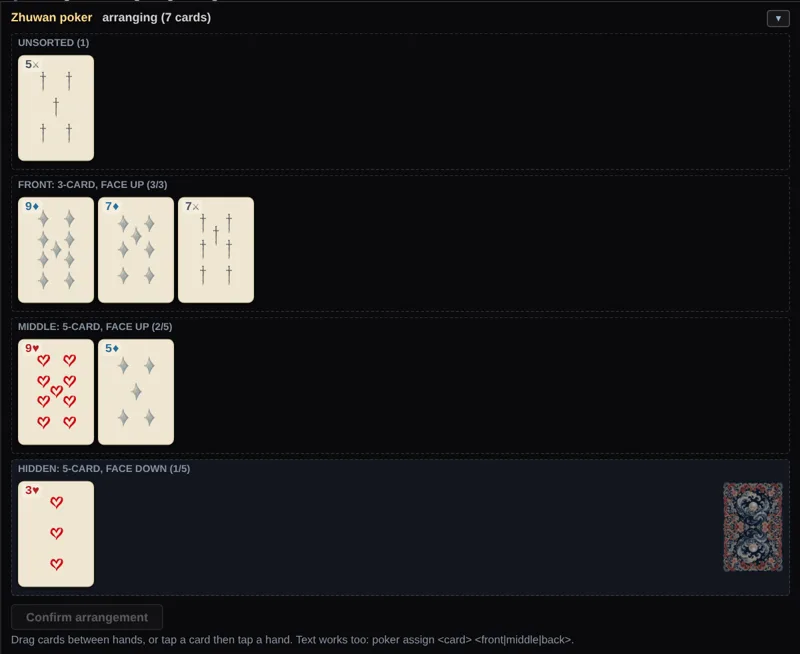
Zhūwān poker. Take a seat at the city's own card game. You are dealt thirteen cards over two rounds and arrange them into three hands: three cards face up, five face up, and five hidden. Each hand has its own showdown and its own pot, so you decide after each one whether to stay in.
Music and sound
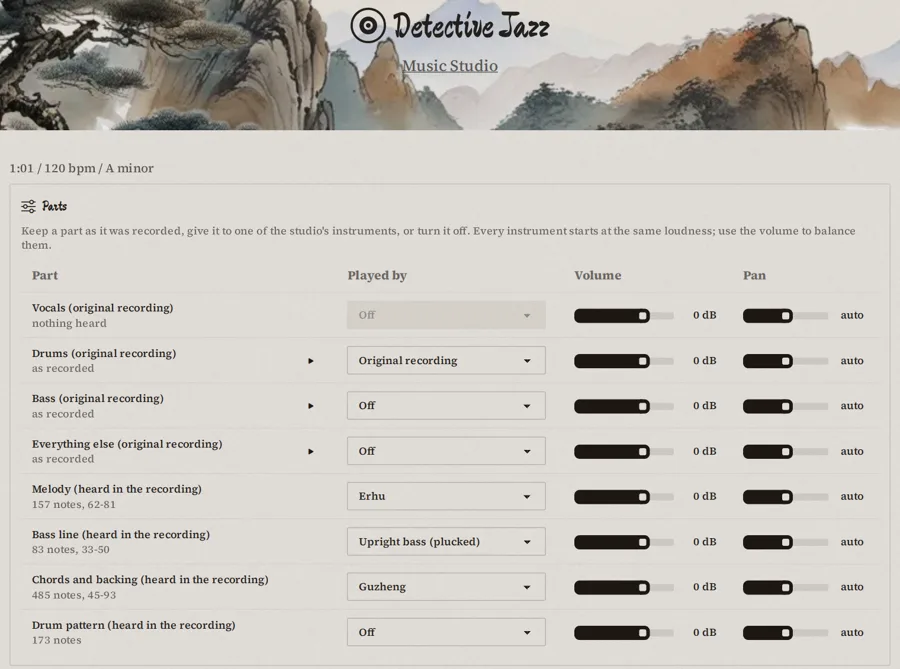
The Music Studio. Upload a recording and/or a MIDI file. The studio separates it into voice, drums, bass and the rest, writes down the notes it hears, and lets you choose what plays each part, from erhu and guzheng to upright bass. Then play it in game with song play, or give someone a copy.
The soundtrack. The game has its own music, sound effects and birdsong, and they are now mixed so the music sits underneath, the world's ambience above it, and the sounds of events on top.
Quality of life
- The ? button. Switch it on and click anything to find out what it is.
lookupshows what your character knows about someone.- Command aliases let you set your own shortcuts.
- Spelling and grammar checking in the command bar.
- A new mailbox, and rumours on the notice boards.
始Getting started
- New players: make a character and you will go straight into the Memory Tutorial.
- Returning players: your character is eleven years older. Pick up a copy of the Bulletin, and look for the School Flashback button on your dashboard.
One character per family, and one per epoch. You can play as many characters as you like, as long as no two of your living characters share a family or an epoch.
Thank you to everyone who played the alpha. Your reports and your stories shaped all of this. See you in the Empire.