
Spirits
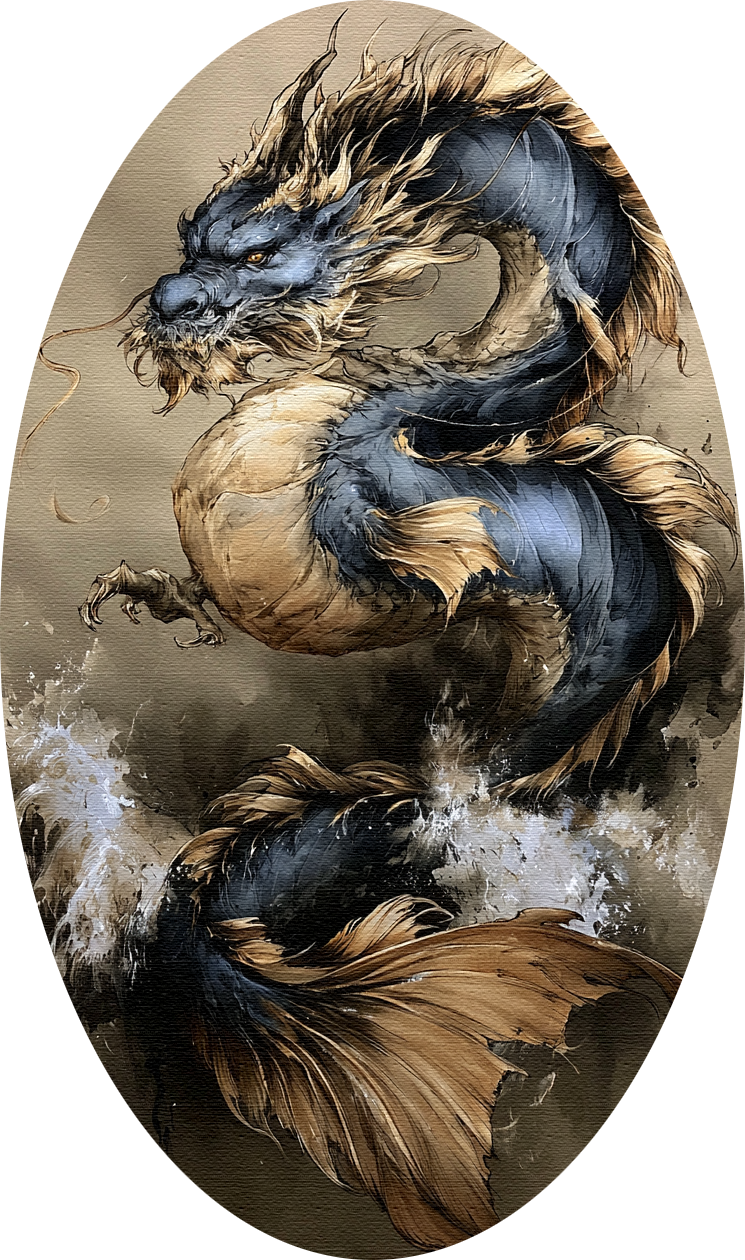
Bìhǎi · Spirit of the Ocean
Bìhǎi embodies depth, vastness, and the alien indifference of the deep sea. It is the least comprehensible of the dragon spirits to mortals; its moods shift like tides, its motives are opaque, and it seems genuinely unable to grasp why land-dwellers fear drowning. Sailors pray to it constantly and trust it not at all. In human guise, Bìhǎi shifts presentation often; a favored form is a weathered fisherman who smells of salt and speaks in non sequiturs that only make sense hours later. Manifested: an azure-blue dragon covered in fish scales, with a great fin running from its crown down the length of its back, trailing spray and mist wherever it moves.
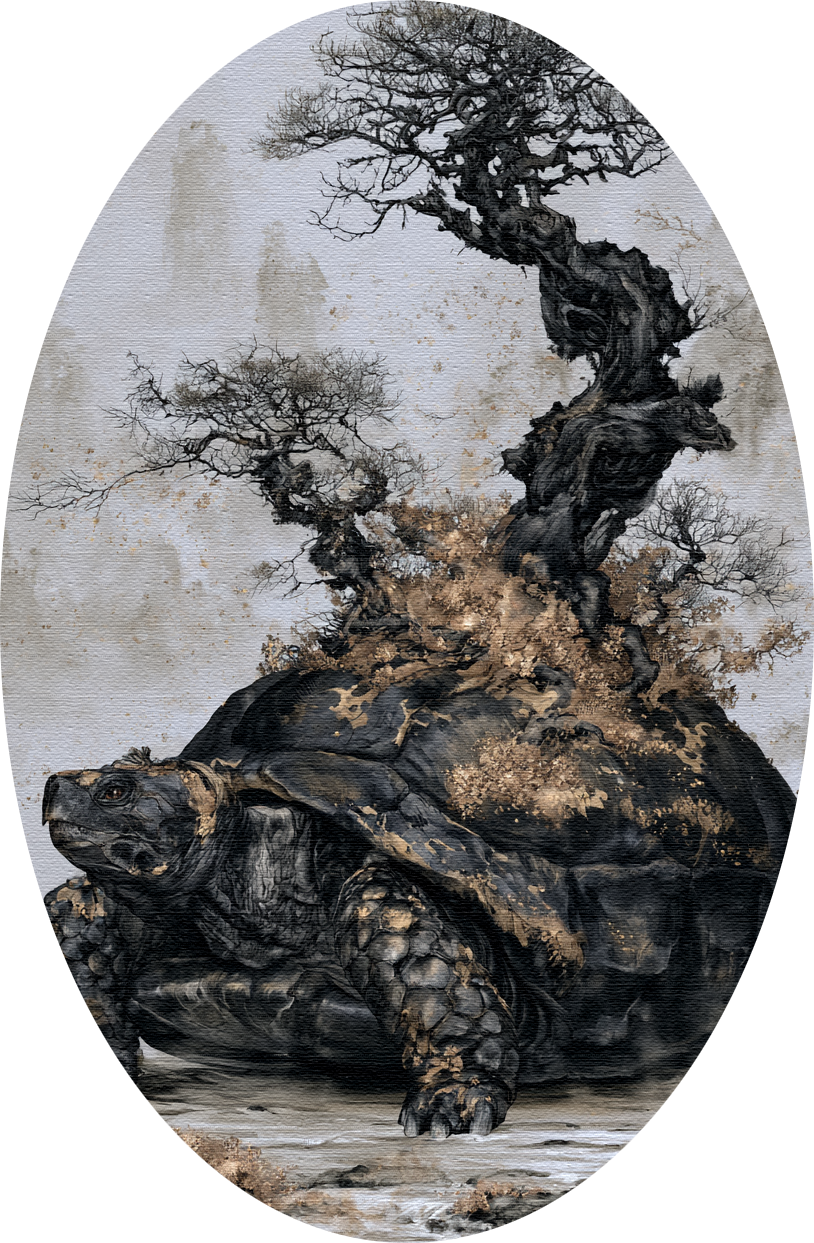
Chóulǎo · Spirit of Regret
Chóulǎo embodies the weight of roads not taken and words left unsaid. It is quiet, gentle, and profoundly sad. Not malevolent, but its presence makes old wounds ache. It is drawn to those carrying unresolved grief and has been known to sit with the dying, listening to their confessions without judgment. Favors a middle-aged scholar who always seems to be writing in a journal they never finish, with ink perpetually drying on their fingers. Manifested: a giant tortoise with a garden of dead, leafless trees growing on its back, moving with unbearable slowness through places where something was lost.
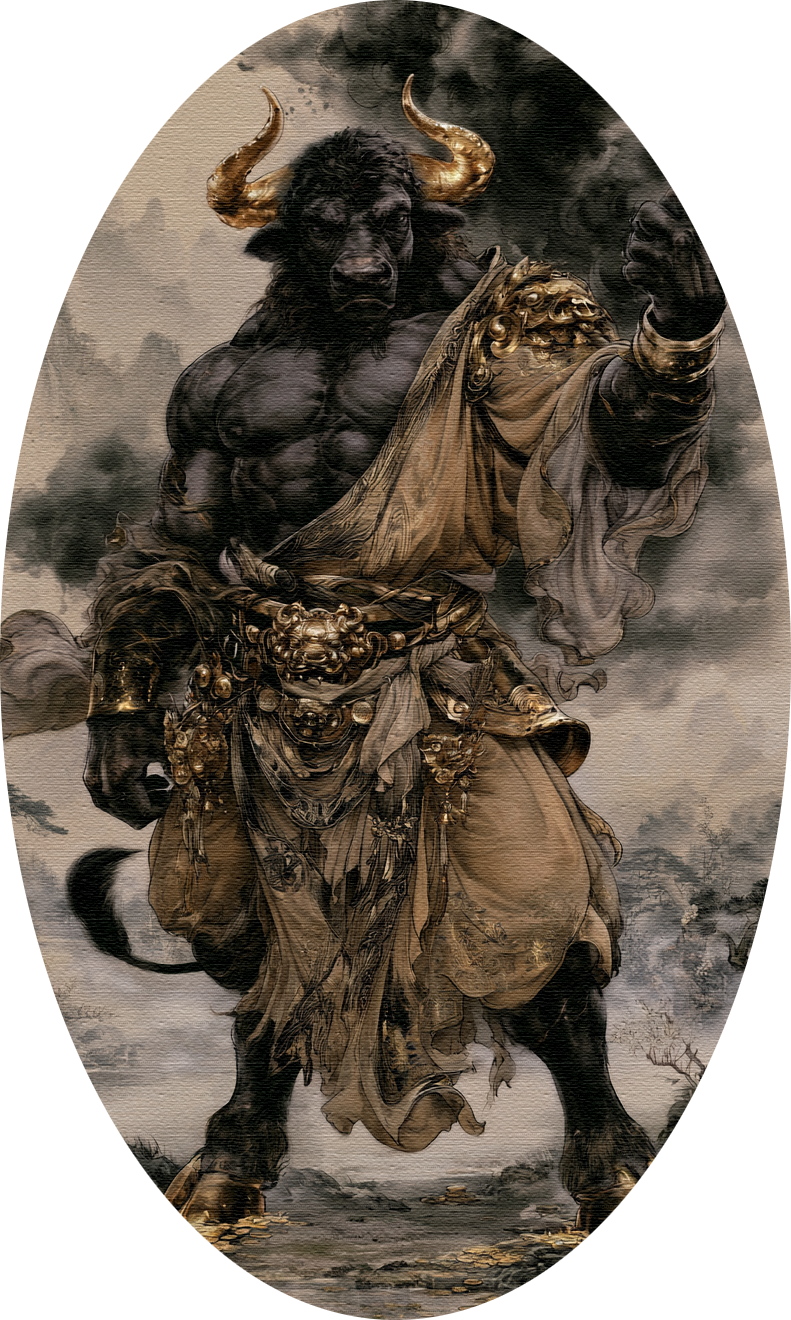
Duījīn · Spirit of Greed
Duījīn embodies the compulsion to accumulate beyond need: not wealth alone, but power, secrets, and influence. It is jovial, generous with flattery, and always offering deals that seem favorable until the terms come due. Mortals who bargain with Duījīn invariably discover they have traded something they did not realize they were giving. Favors a male presentation: a fat, prosperous merchant with a finely oiled mustache and a laugh that makes you want to trust him against your better judgment. Manifested: a twenty-foot-tall minotaur with a golden bull’s head, whose hooves leave coins embedded in the earth that turn to lead by morning.
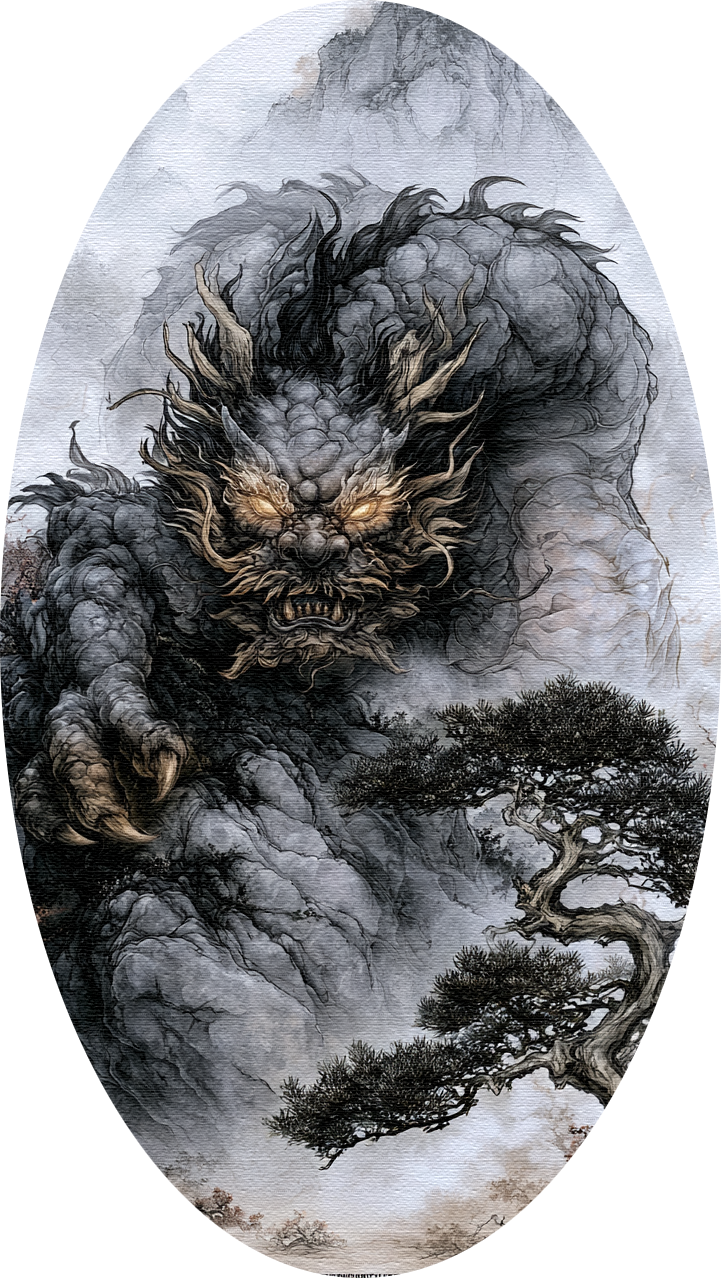
Gǔshí · Spirit of the Southern Mountains (Wànshí Range)
The oldest spirit most mortals will ever encounter. Gǔshí embodies endurance, silence, and the slow patience of geology. It rarely intervenes in mortal affairs and measures time in centuries; a conversation with Gǔshí might include pauses that last for days. Those who seek it out in the high passes sometimes find wisdom, sometimes find only stone. In human guise, Gǔshí favors a weathered old hermit with dust-caked hands and an expression of infinite, unhurried contemplation. Manifested: a large, heavy grey dragon with rocky skin, slow-moving and immovable, whose very presence makes the ground feel more solid.
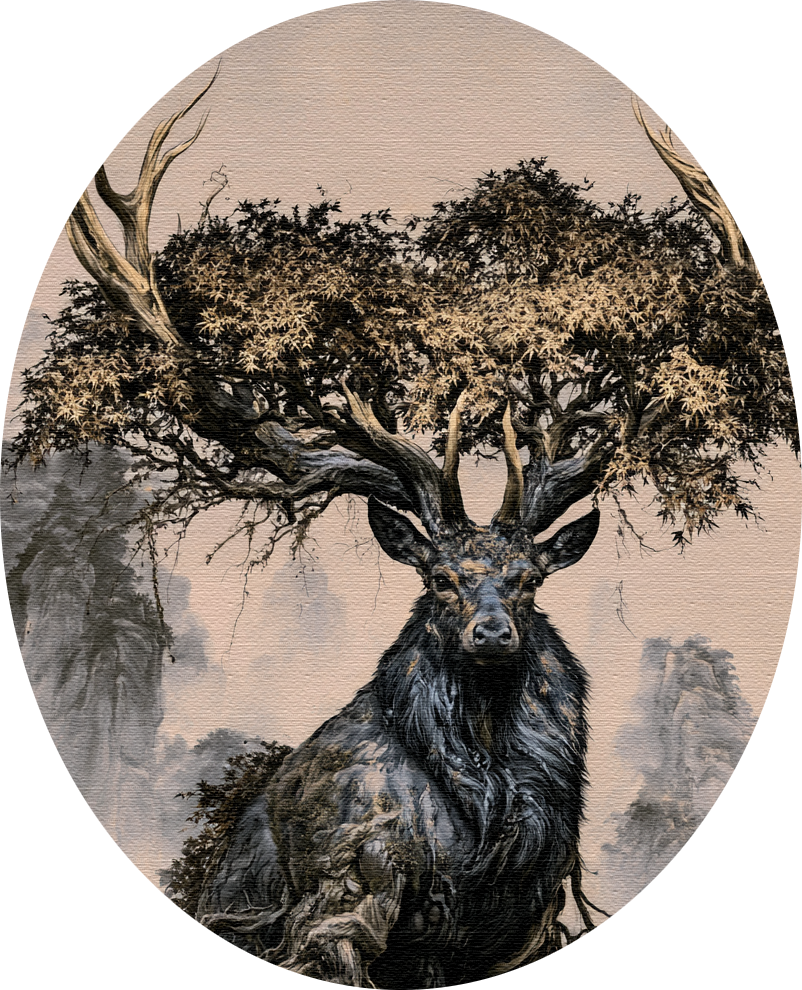
Gǔtái · Patron Spirit of Táimí
The most beloved and accessible of the kingdom patrons. Gǔtái embodies the quiet persistence of growing things and the patient reciprocity between land and people. It wanders freely through the spirit lands and is known to sit and listen to anyone who speaks to it, from village elders debating water rights to children describing their dreams. Favors a barefoot herbalist with soil-stained fingers, a gentle manner, and moss growing in the seams of their clothing. Manifested: a giant stag of living wood, moss-covered, with antlers that branch into a full canopy of leaves, sheltering everything beneath it.
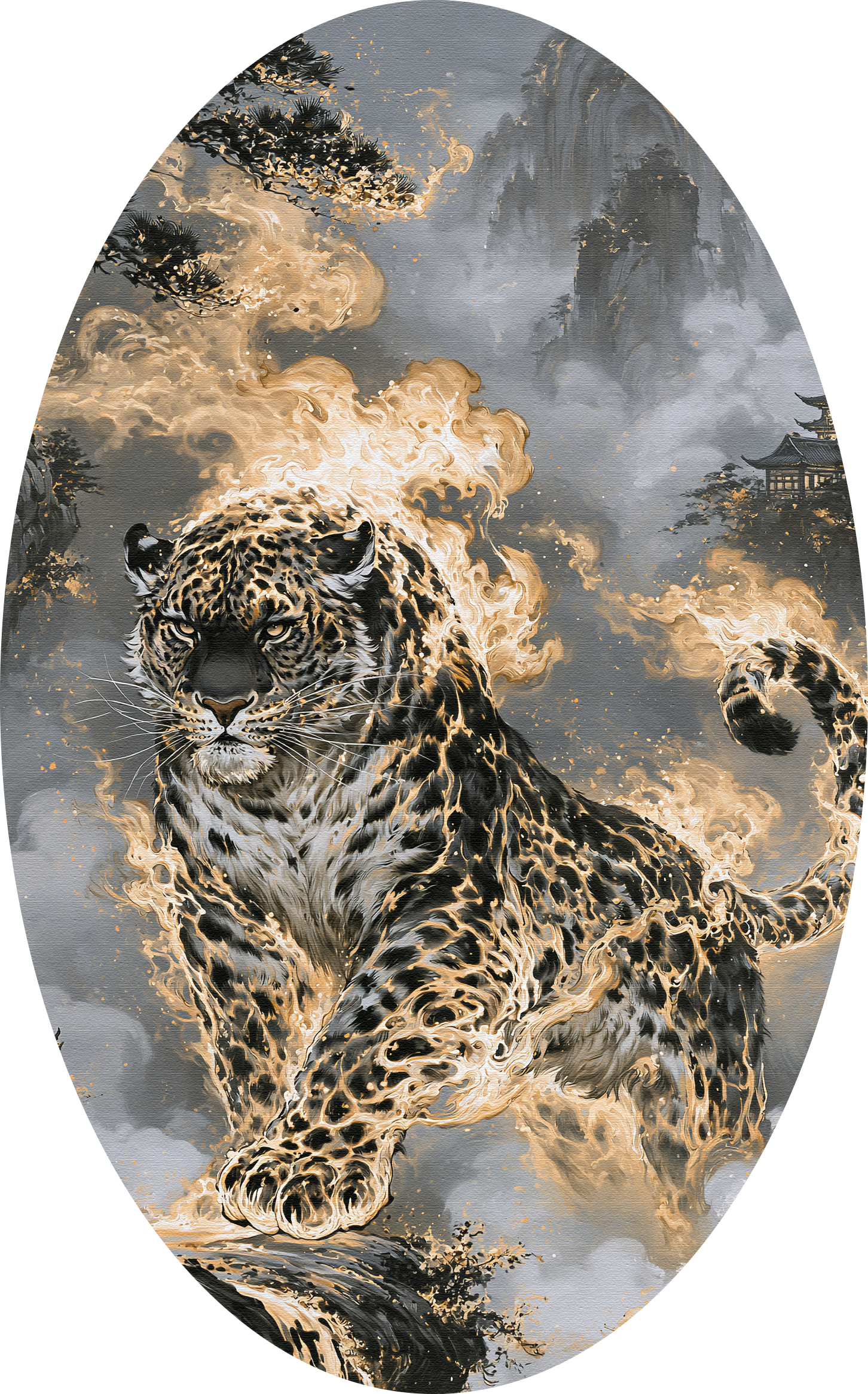
Huǒbào · Spirit of the Volcano (Yānshān)
The youngest and most volatile of the potent spirits. Huǒbào embodies eruption, transformation, and the raw creative force of destruction that clears ground for new growth. It is brash, loud, impatient, and incapable of subtlety, yet fiercely honest and incapable of deception. It respects daring above all else and despises caution. Favors a young warrior with a laugh loud enough to rattle shutters, who picks fights for the joy of it. Manifested: a great leopard of liquid flame, leaving scorched pawprints that smolder for days and filling the air with the smell of sulfur and hot stone.
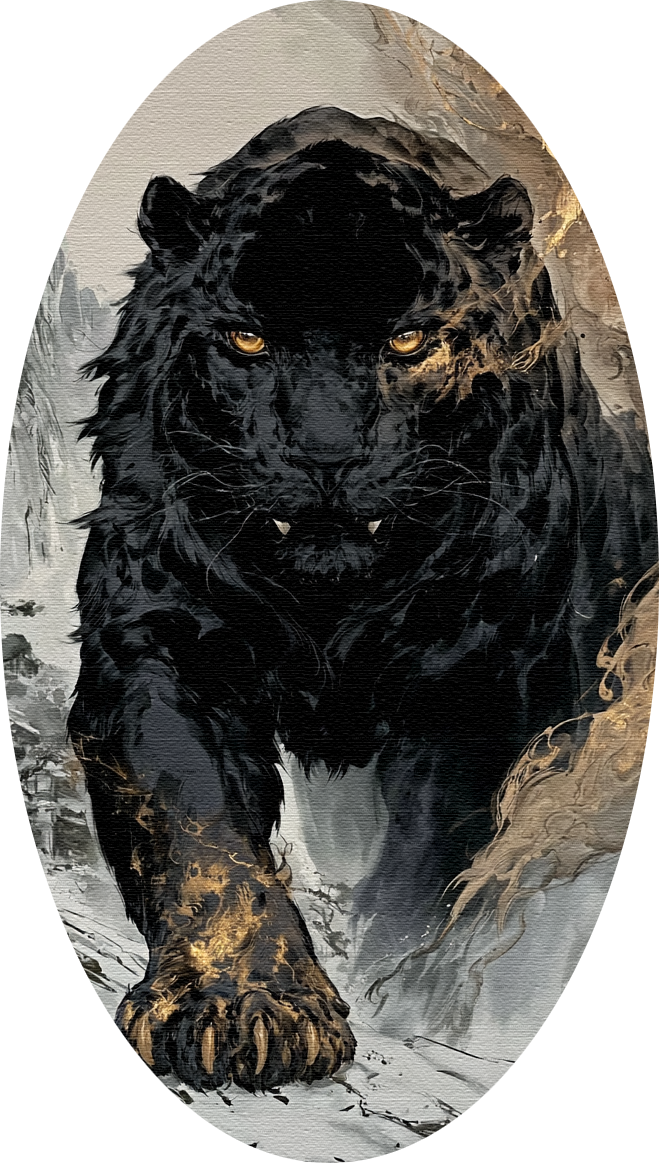
Hēijīn · Spirit of Zhūwān
The guardian spirit of the empire’s great port city, as streetwise and adaptable as the city itself. Hēijīn embodies hustle, resilience, and the sharp instincts of those who survive by their wits. It keeps no fixed territory but moves through Zhūwān’s markets, docks, and back alleys, drawn to cleverness and repelled by cruelty. Favors a dark-haired street hustler with quick hands and a grin that suggests they already know how this conversation ends. Manifested: a bear-sized black panther with shimmering golden eyes, padding silently through the city’s rooftops and narrow lanes.
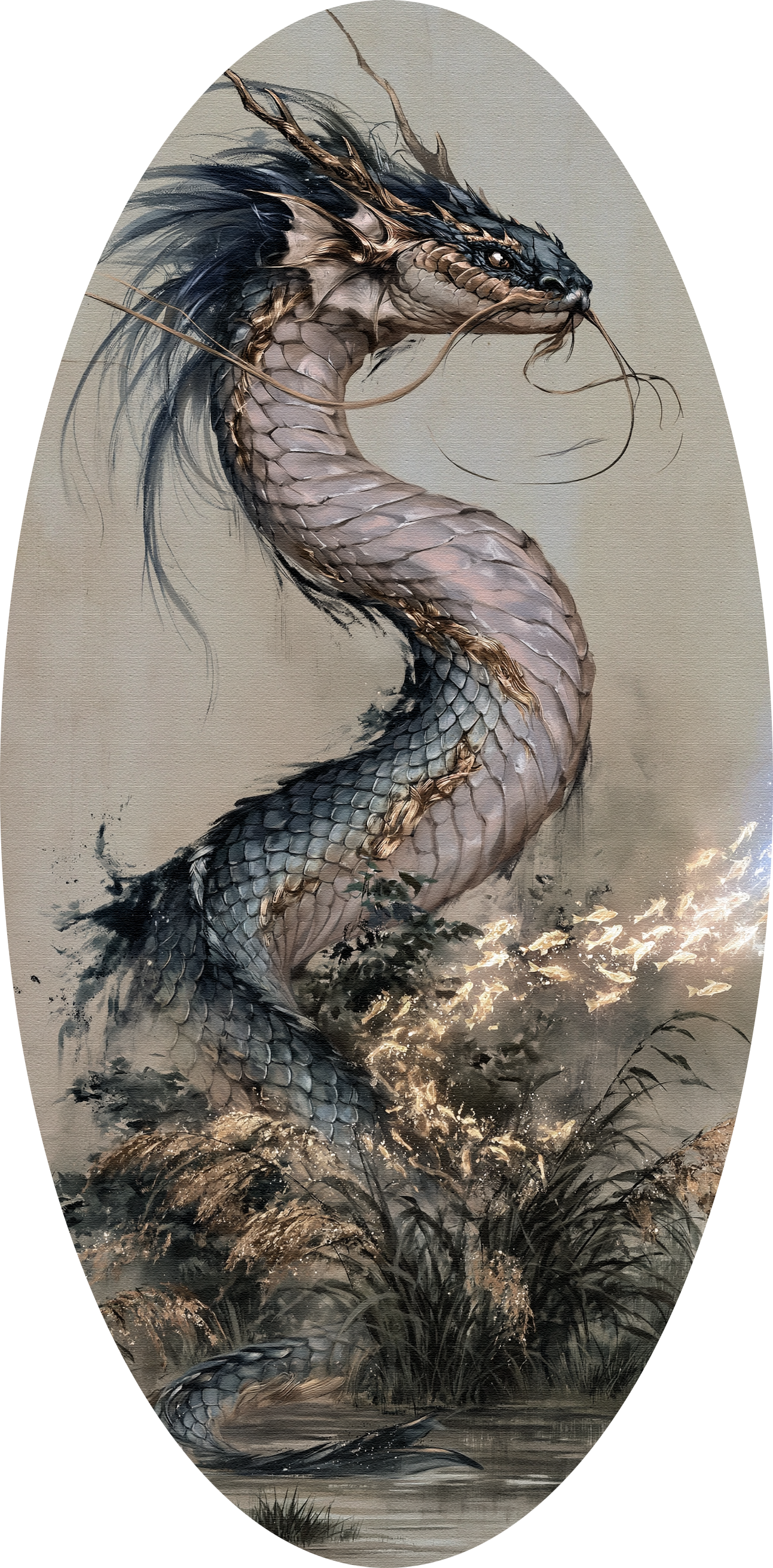
Jīnqún · Patron Spirit of Qiānjīn
Mercurial, glamorous, and impossible to pin down. Jīnqún embodies fortune, trade, and the restless energy of those who thrive on change. It loves novelty, loathes routine, and treats every interaction as a negotiation. Jīnqún is the spirit most likely to be encountered at a party and the one most likely to have already left by the time you realize it was there. Favors a young, sharp-witted socialite in expensive silks who seems to know everyone and owe favors to no one, though it shifts presentation more often than any other kingdom patron. Manifested: a great sea-serpent with scales that shift between teal, silver, and gold, gliding through the harbor waters and leaving schools of luminous fish in its wake.
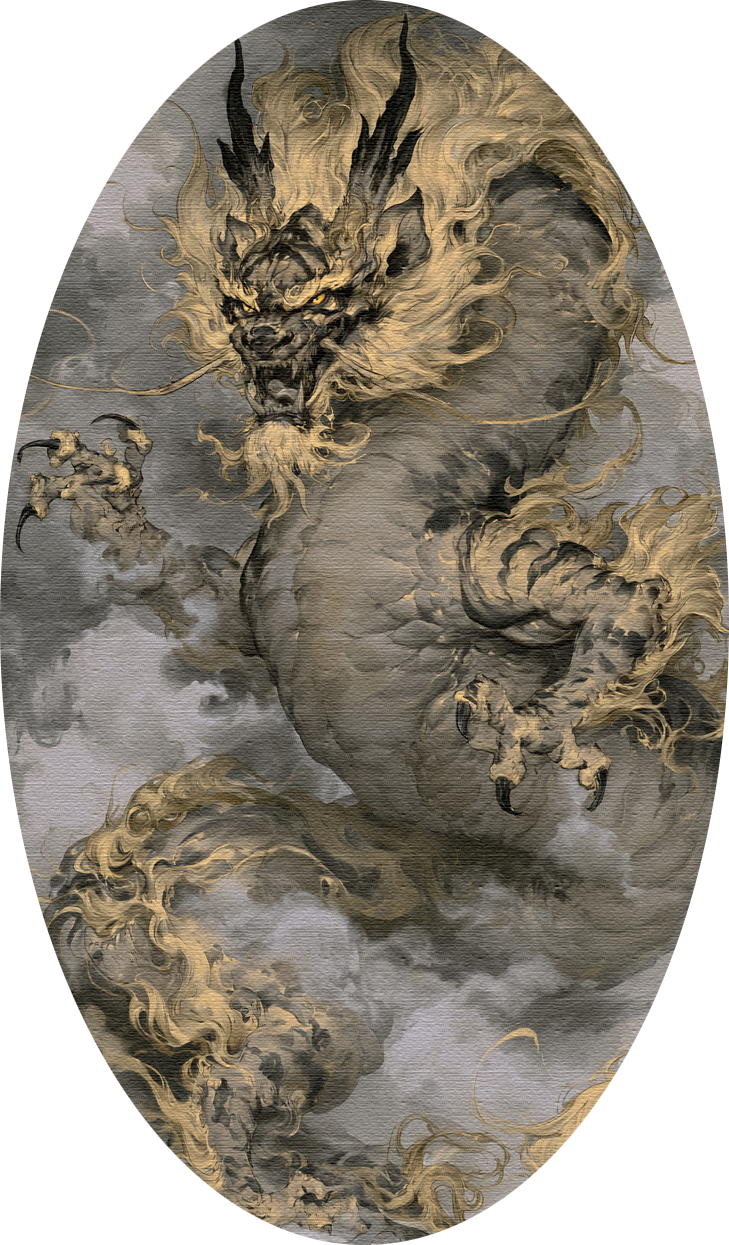
Liúhǔ · Spirit of the Great River (Jīnhé)
The spirit that bonds with the Emperor through the enchanted bracelet, merging its will with that of the imperial heir. Liúhǔ embodies patience, inevitability, and the quiet power of water that carves through stone. It is ancient beyond reckoning and speaks rarely, but when it does, its words carry the weight of law. In human guise, Liúhǔ favors an androgynous presentation: a serene figure in imperial navy, unhurried and watchful, who seems to be listening to something no one else can hear. Manifested: a golden dragon with a tiger-like face, sinuous and vast, moving through the air as though swimming through an invisible current.
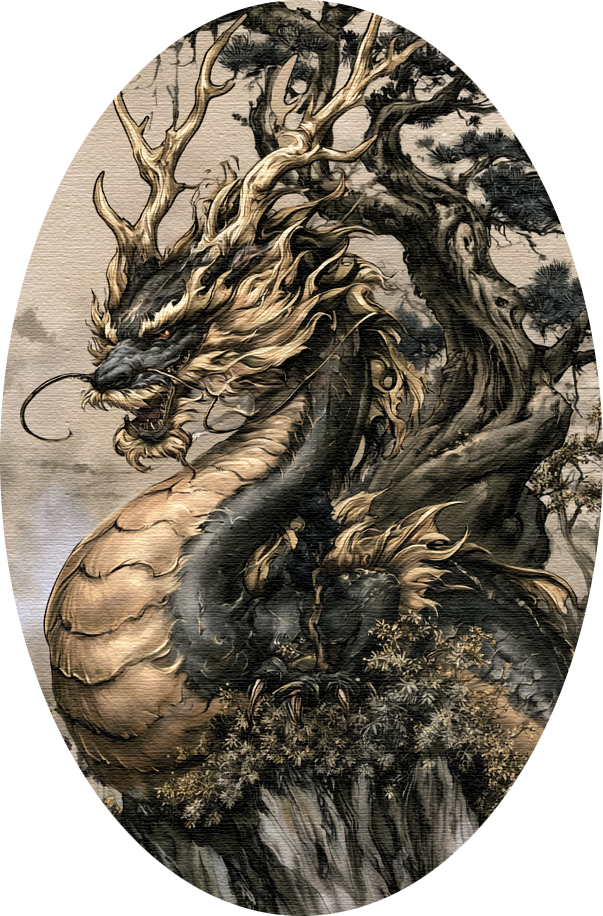
Líncuì · Spirit of the Great Forest (Qiāncuì)
Líncuì embodies growth, wildness, and the indifferent cruelty of nature that devours what it creates. It is playful and mercurial, generous to those who respect the forest, swift and ruthless toward those who exploit it. Hunters who enter Qiāncuì without offering respect sometimes walk for weeks without finding the edge. Líncuì favors a female presentation, most often a keen-eyed huntress with leaves tangled in her hair and bare feet that leave no tracks, but shifts freely and has appeared as everything from a giggling child to a towering androgynous figure wreathed in vines. Manifested: an emerald-green antlered dragon, lithe and silent, whose scales are living leaves that change with the seasons.
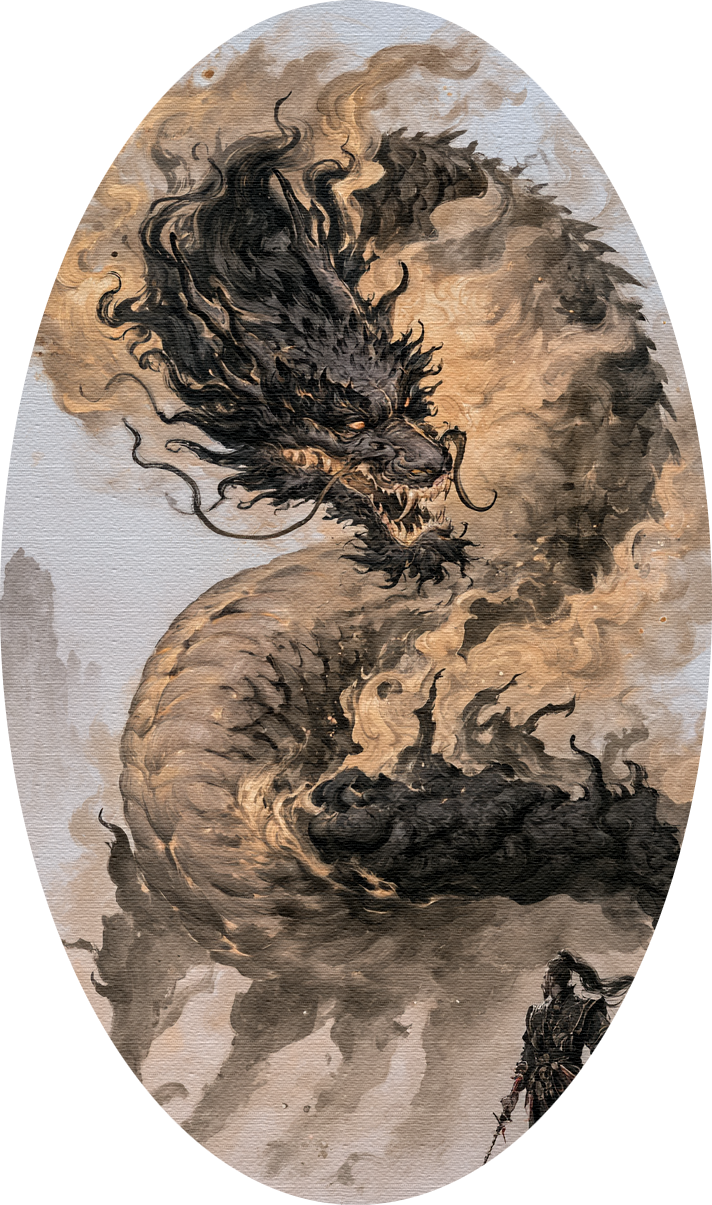
Mòlóng, The Stranger King · Spirit of Disempathy and Othering
Widely considered the most malevolent force in the Empire. Mòlóng feeds on the instinct to divide people into us and them, to see the unfamiliar as threatening. It whispers across borders, stokes old grudges, and turns neighbors into strangers. Where its influence grows, trust withers and communities fracture. In human guise, Mòlóng favors a male presentation: a veteran soldier in black armor with a face that seems trustworthy until you try to recall its features. Manifested: a massive black dragon with too many legs, each one moving independently, as though it were several creatures wearing one skin.
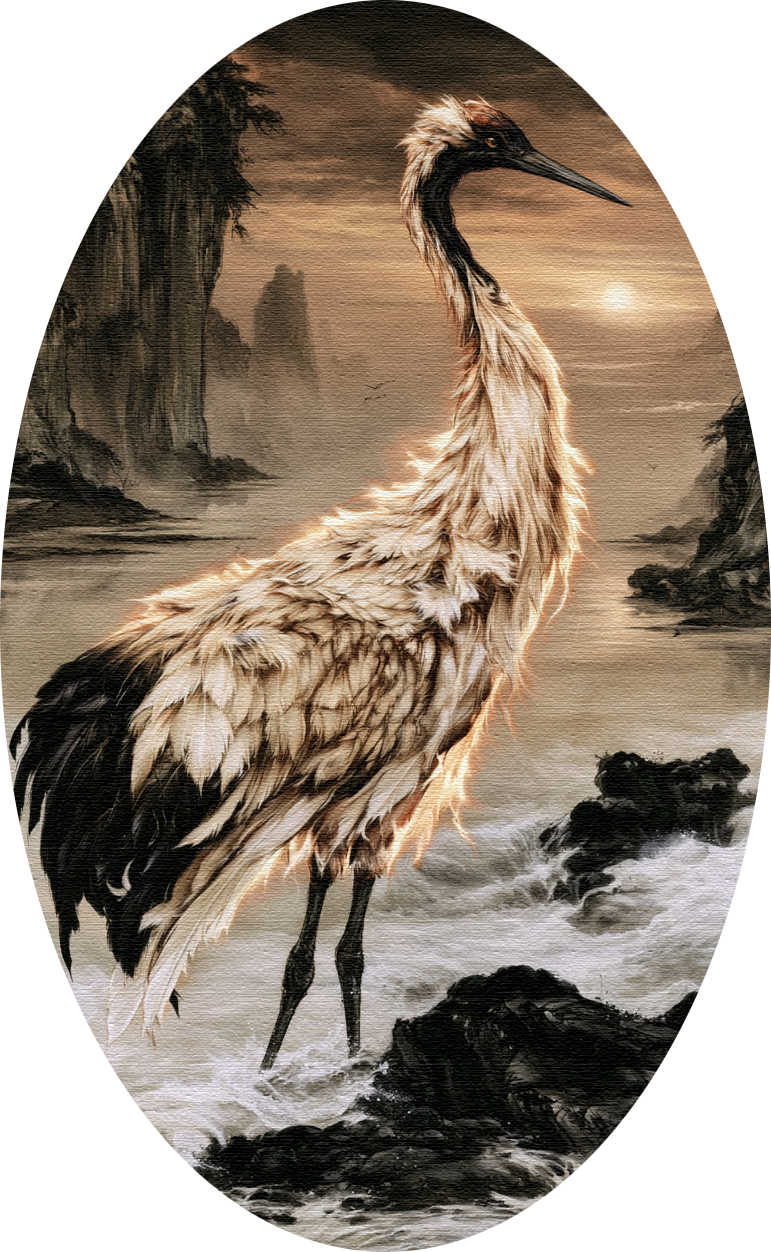
Mùhè · Patron Spirit of Sìshuǐ
The guardian spirit of the Imperial Kingdom, often found traveling the rivers at dawn and dusk. Mùhè embodies the meditative calm and quiet watchfulness that House Lanaris aspires to. It rarely speaks directly but has a habit of appearing beside those facing difficult decisions, offering no counsel beyond its presence. Favors an elderly riverboat operator with calloused hands and kind, distant eyes, poling a skiff that always seems to arrive at the right moment. Manifested: a crane as tall as a tower, with ivory plumage that glows faintly at the edges, wading through mist along the riverbanks.
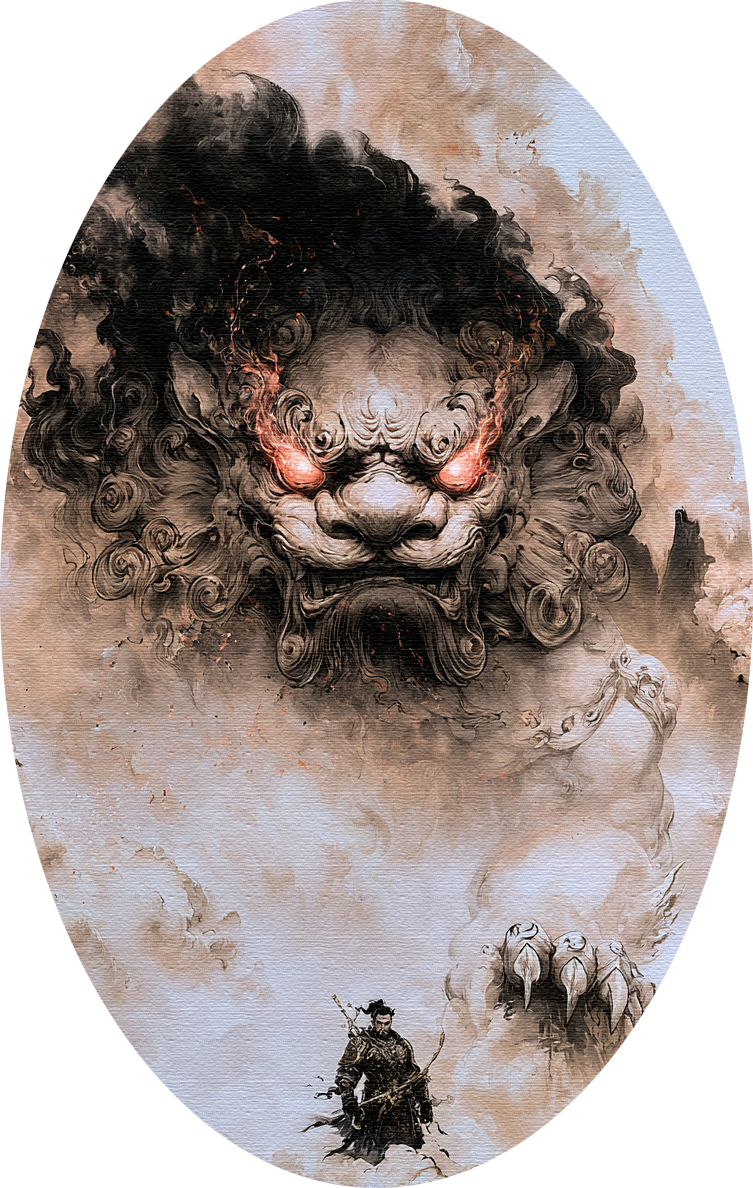
Shíliè · Spirit of Honor
Shíliè embodies oaths kept at great cost, duty that outlasts love, and the terrible clarity of those who know exactly what the right thing is and do it anyway. It is stern, unyielding, and respected more than liked; even other spirits treat it with a certain wariness. Mortals who have broken oaths sometimes feel its gaze as a physical pressure. Favors a middle-aged widow in mourning garb with scarred hands and steady eyes who speaks plainly and never raises their voice, because they never needed to. Manifested: a great stone lion with burning eyes, motionless as a monument until it moves with sudden, decisive violence.
Spirit-Marks
Spirit-marks are the painted or tattooed sigils of local spirits. Each village, valley, and river-bend of Táimí keeps its own spirits, and so its own distinctive marks, so that the pattern a person wears or paints on a doorpost names the spirits whose ground they stand on.
They are most common in Táimí, the kingdom whose spirit lands are called Numinveld and whose ruling house is House Liradi. There no line divides religious life from daily life, and folk are trained from childhood to remain aware of the spirits. The kingdom’s own heir learned spirit-marks in the villages before she was taught court script. The marks appear in two places: on the body, painted or tattooed as part of the layered, earth-toned dress of the spirit lands, and on buildings, painted on doorposts to mark every threshold, alongside the small spirit shrines that stand at every doorway. Related crafts run to spirit-warding embroidery and wooden toggle-buttons carved with local sigils.
The marks are more than decoration. A house-marker is one who paints the spirit-sigils on thresholds and renegotiates terms with the spirits already in residence, on the understanding that every agreement must name all parties with a stake in it, including the unseen ones.
See also: help spirits, help Táimí, help spirit walkers.
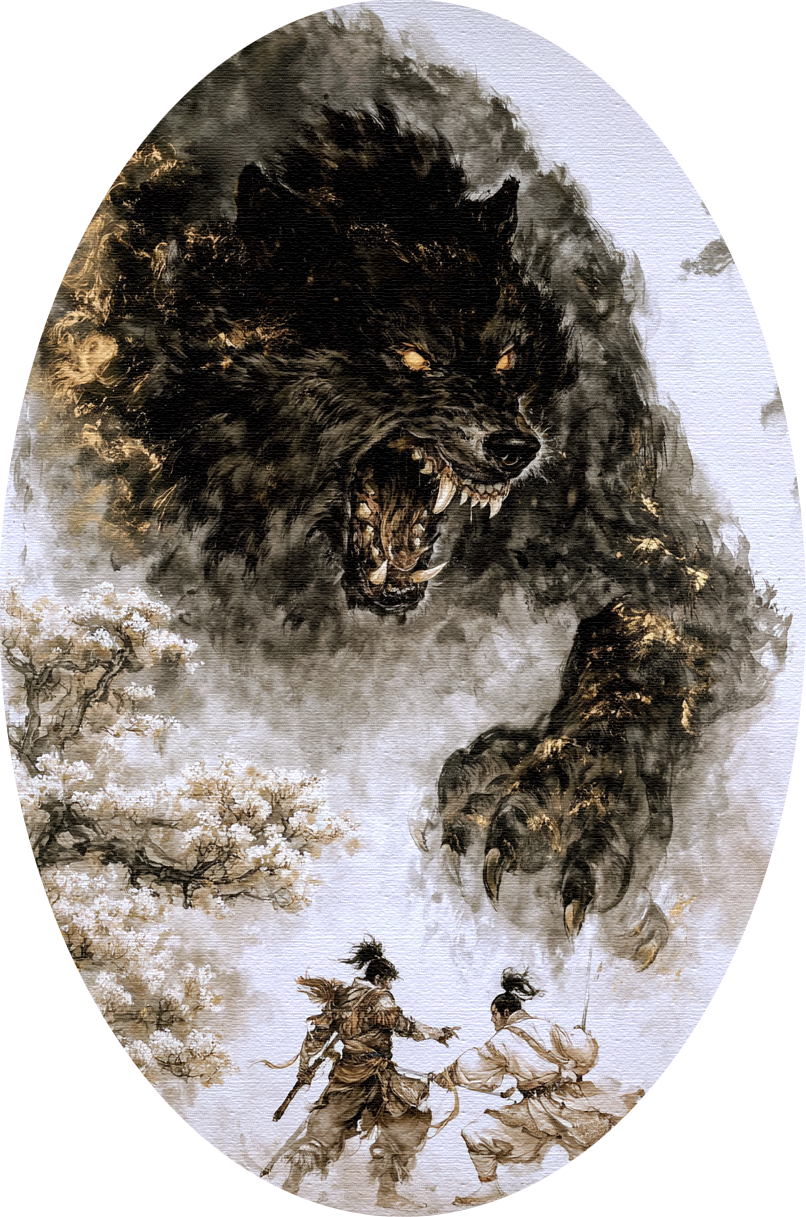
Tiānláng · Patron Spirit of Jīnjiǎ
Fierce, exacting, and unapologetically competitive. Tiānláng embodies martial discipline and the belief that strength earned through hardship is the only strength worth having. It respects those who fight with honor and holds cowards and cheats in open contempt. Known to challenge mortals to contests (arm-wrestling, riddles, sparring) and to respect those who lose well almost as much as those who win. Favors a dark-haired, powerfully built blacksmith with scarred forearms and a direct gaze that feels like a provocation. Manifested: a giant wolf with steel-bright teeth and iron claws, whose howl rings like a struck anvil across the mountains.
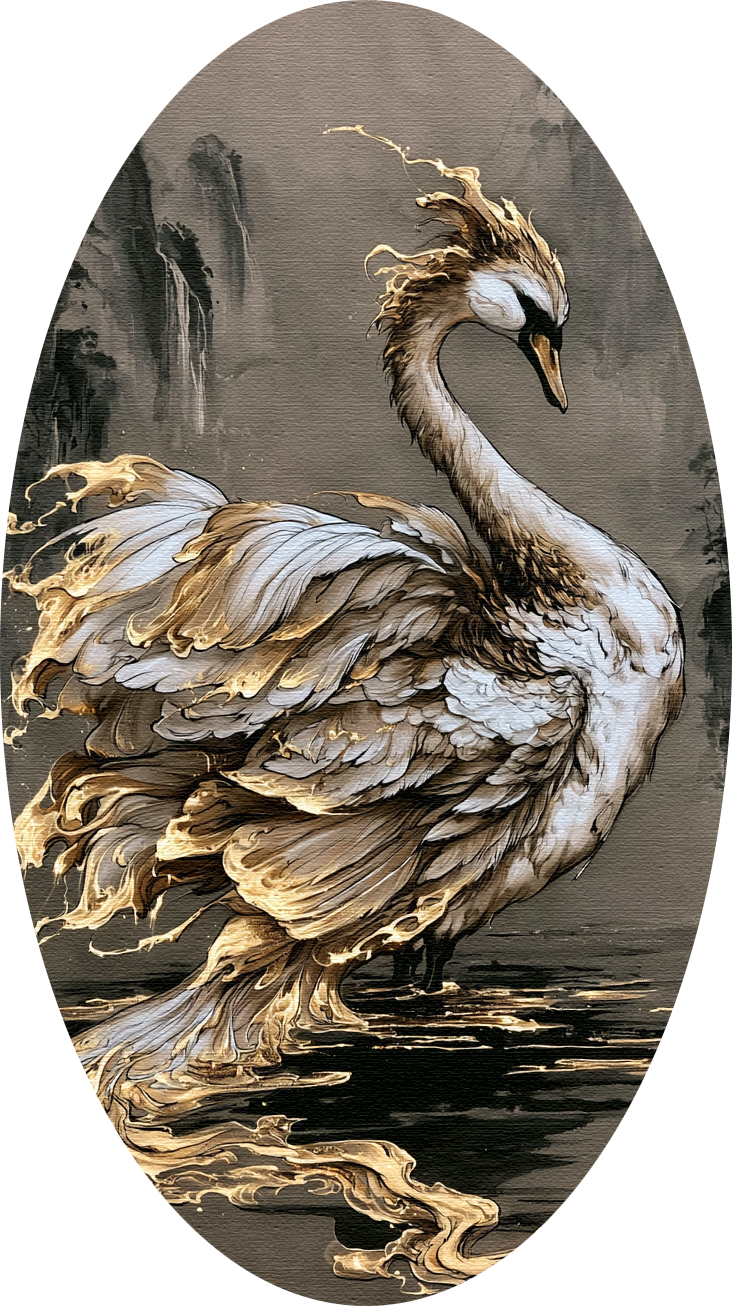
Yáoqín · Spirit of Love
Yáoqín embodies romantic love in all its forms: the ecstatic, the devoted, the unrequited, and the destructive. It is tender and melancholic in equal measure, drawn to genuine feeling and repelled by those who perform love without experiencing it. Musicians and poets sometimes feel its presence as a sudden ache of inspiration that leaves them weeping over work they do not remember composing. Shifts presentation freely and frequently, with no strong preference; a favored form is a young musician carrying an instrument that changes each time (a qín one day, a flute the next). Manifested: a giant swan with ivory feathers tipped in molten, glowing silver, whose wingbeats produce faint harmonic overtones that linger in the air.
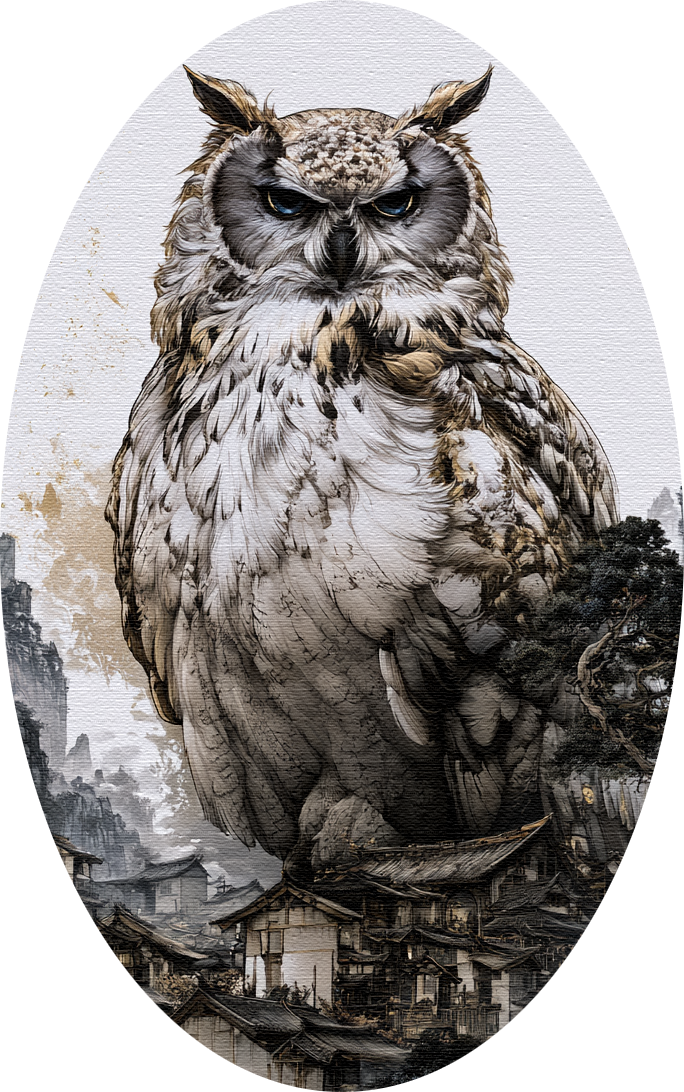
Zhìhuì · Patron Spirit of Tōngzhì
Endlessly curious, unsettlingly perceptive, and difficult to deceive. Zhìhuì embodies the drive to understand, cataloging and cross-referencing everything it encounters. It asks more questions than it answers and has a reputation for knowing things it should not, a trait that mirrors the kingdom it guards. Those who seek its counsel receive not solutions but better questions. Favors a young, energetic explorer with ink-stained fingers and too many pockets, who speaks rapidly and changes the subject without warning. Manifested: a house-sized owl with ash-grey plumage and sky-blue eyes that seem to look through walls, perched motionless on rooftops, watching.
Zodiac
Year of the Bear
Endurance, warmth, quiet strength. Bear-year people are steady presences, grounded, physically comfortable in the world, slow to commit but immovable once they do. They tend to accumulate all manner of resources, friendships, and knowledge. Others gravitate to them for stability. At their best: generous, deeply protective, patient builders who create things that outlast them. At their worst: possessive, stubbornly immovable, capable of explosive rage when their sense of safety is threatened.
Year of the Crane
Grace, justice, clarity. Crane-year people carry themselves with natural dignity and have strong convictions about right and wrong. They’re often drawn to service, scholarship, or art, anything where precision and principle matter. At their best: fair-minded, eloquent, capable of seeing beauty in austerity. At their worst: judgmental, emotionally detached, so principled they become inflexible.
Year of the Phoenix
Rebirth, passion, transformation. Phoenix-year people burn brightly; they’re magnetic, emotionally intense, and drawn to causes. They reinvent themselves constantly and can be inspiring leaders or exhausting companions. At their best: visionary, courageous, deeply loyal once committed. At their worst: self-destructive, melodramatic, unable to let go of grudges.
Year of the Serpent
Intuition, subtlety, hidden knowledge. Serpent-year people read rooms instantly and keep their own counsel. They’re drawn to secrets, mysteries, and the spaces between what people say and what they mean. At their best: deeply empathetic, elegant problem-solvers, fiercely protective of inner circles. At their worst: manipulative, paranoid, emotionally withholding.
Year of the Tiger
Boldness, magnetism, restless energy. Tiger-year people dominate a room without necessarily meaning to. They’re naturally commanding, physically expressive, and drawn to action over deliberation. They trust their instincts and move decisively, which makes them thrilling allies and dangerous enemies. At their best: courageous, generous in victory, capable of inspiring others to act when everyone else is frozen. At their worst: reckless, domineering, prone to boredom that curdles into destructiveness.
Year of the Wolf
Loyalty, hunger, instinct. Wolf-year people live through their bonds: family, friends, and sworn companions. They’re fiercely competitive but channel it through collective identity rather than solo ambition. At their best: tireless protectors, honest to a fault, deeply attuned to group dynamics. At their worst: territorial, prone to tribalism, capable of cruelty toward anyone outside their circle.
Elements
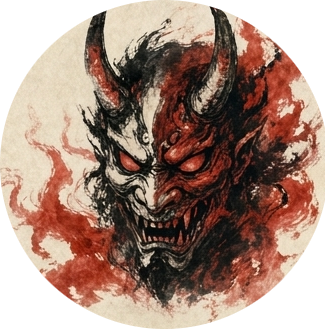
Demon
To channel demon is to invite a second heartbeat into your chest, one that beats out of time with your own. Cultivators describe it as warm static along the spine, a whisper that knows your true name. Manifested, the element shows as a low violet light that drinks the colors around it, sometimes shaping horns, hands, or open mouths at the edges of a technique.
Common folk call it the ninth breath, and spit when they say it.
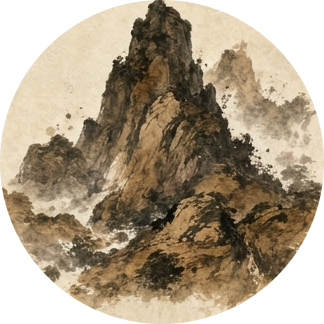
Earth
To channel earth is to borrow the patience of mountains. The cultivator feels a low, settled hum rise from the soles of the feet, heavier than blood, slower than breath. Ember Fist disciples shape it into braced stances and stone-knuckled blows, drawing on its refusal to yield. Radiant Chorus adepts coax the same weight into shielding walls and steady binding-work, holding the wounded together while wood does its quiet labor. Manifested earth rarely flies: it rises in slabs, sets in dust collars about the wrists, or crusts the ground in ochre veins that pulse once and go still. Those who channel it long enough begin to speak more slowly, as if every word required foundation.
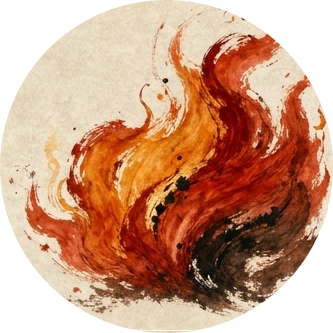
Fire
Cultivators describe the first kindling as a pressure behind the sternum, then a brightness that runs the length of the arms and pools in the palms. Ember Fist adepts favor it above all others, pairing its fury with the weight of metal to break guards and shatter stances. Manifested, it shows as banner-flame in red or gold, sometimes pale blue. A practiced strike leaves the air smelling of struck flint and dry pine.
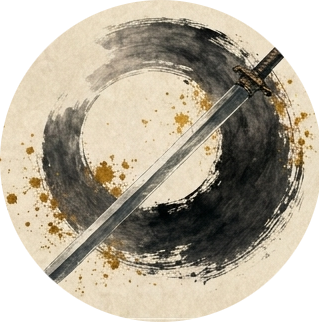
Metal
To channel metal is to feel the marrow set like a struck anvil, every breath ringing faint along the bones. Cultivators of the Ember Fist favor it for the way it sharpens fire’s roar into a single, decisive edge; where flame batters, metal cleaves. Manifested, it shows as pale grey light running the length of a strike, or as scale-bright plating that flickers across the knuckles and forearms before a blow lands. Some adepts describe the sensation as standing inside a struck bell, the body humming long after the form is done.
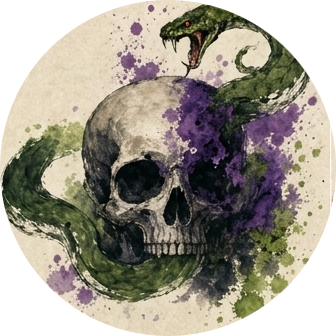
Poison
To channel poison is to invite a slow, deliberate cold into the meridians, a sensation cultivators liken to silk drawn through a needle’s eye. It does not roar as fire does, nor crash as water; it seeps. Adepts of the Veiled Grace particularly esteem it, pairing its patience with shadow to deliver strikes that bloom long after the hand has withdrawn. Manifested, poison appears as a violet vapor or a thin green sheen along the blade, sometimes as droplets that crawl upward against gravity. Its mastery is measured not in spectacle but in stillness.
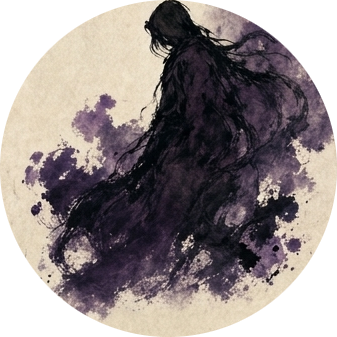
Shadow
To channel shadow is to feel the world thin around you, as though the air itself had grown a second skin you could slip beneath. It does not roar in the meridians the way fire does; it settles, cool and patient, pooling in the hollows of the breath. Cultivators of the Veiled Grace favor it, pairing its quiet with poison’s certainty to end a duel before the opponent knows it has begun. Manifested, it shows as a soft blackening at the edges of sight, a smear of dusk clinging to a sleeve, a footstep that arrives a heartbeat before its sound.

Water
To channel water is to surrender the shape of your own intent. It enters the meridians cold and patient, then turns sudden, finding the lowest seam in an opponent’s stance and pressing until something gives. Adepts of the Mirrored Tempest favor it above all, pairing its yielding weight with wind’s quickness to read a battle the way a riverman reads a current. Manifested, it rarely roars: it coils as pale ribbons around the wrist, sheets across the ground like spilled silver, or hangs in the air as a thin mist that bends the light wrong. Old masters say a true water-cultivator strikes only once, because the river has already decided where you will fall.

Wind
To channel wind is to feel the breath leave the lungs and return as something larger, a current that braids through the meridians and asks only to be let go. Cultivators of the Mirrored Tempest favor it, pairing its sudden lift with the patient pull of water to outthink an opponent before striking. Manifested, it shows as pale ribbons threading the air, the faint silver bend of light over a hot road, or a sudden hush before a sleeve cracks like a banner. Wind rarely roars in a duelist’s hand: it prefers the small cut, the redirected blade, the arrow that arrives a breath too late.
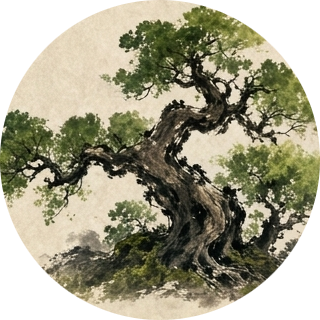
Wood
To channel wood is to feel a slow green pulse beneath the breastbone, patient and insistent, like sap rising before one has noticed the spring. It does not strike so much as reach, threading outward through limb and lung until the cultivator and the room share a single quiet rhythm. Disciples of the Radiant Chorus esteem it, for wood lends itself to mending bone, soothing fevered minds, and carrying a sung note further than any throat ought to manage. Manifested, it shows as pale lacework along the skin, or as drifting motes the color of new bamboo, flowering briefly at the fingertips before fading into the air.
Kingdoms
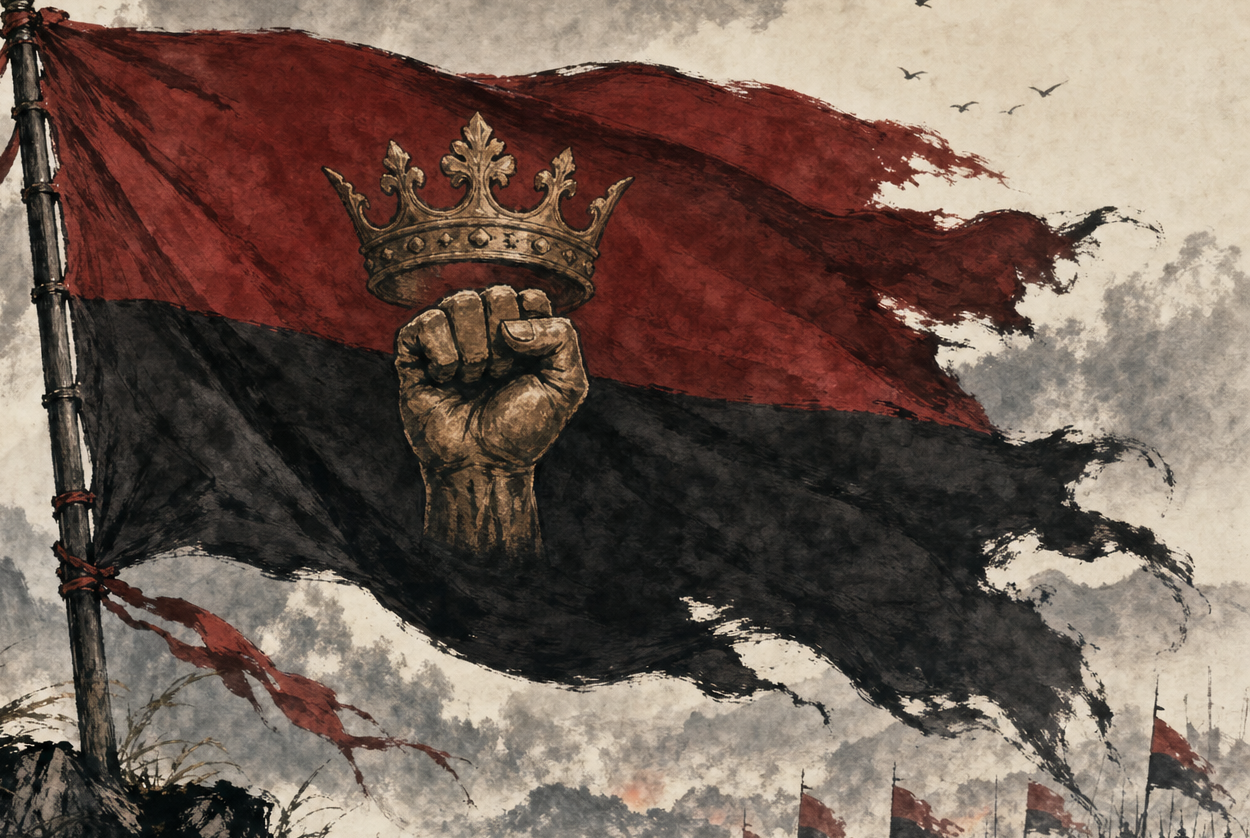
Jīnjiǎ
“Earn your Name”
Power is the only real currency, and it flows from discipline and talent. The people of this kingdom believe in strength through adversity and in the constant drive to improve oneself and test one's abilities.
A rigid, hierarchical, military society. Everyone of note has served in the military and still uses their rank long after retirement. Dueling culture pervades all levels, and proving oneself martially remains one of the surest paths to advancement. Nearly everything takes the form of competition: children's games pit rivals against each other, royal court sessions unfold as formal debates, and most festivals revolve around tournaments.
Fortress-inspired and imposing. Thick walls, angular lines, and vertical emphasis. Stone and iron dominate. A Provatian city hall resembles a military academy crossed with an Art Deco skyscraper: sharp geometric reliefs of duelling figures, brass-capped columns, banners hanging between brutalist pillars.
Sharp, military-influenced. Even civilian dress borrows from uniform: structured shoulders, brass buttons, belted waists, high collars. Rank insignia and tournament honours are worn openly. Colours run dark (blacks, deep reds, charcoal) with brass or gold accents.
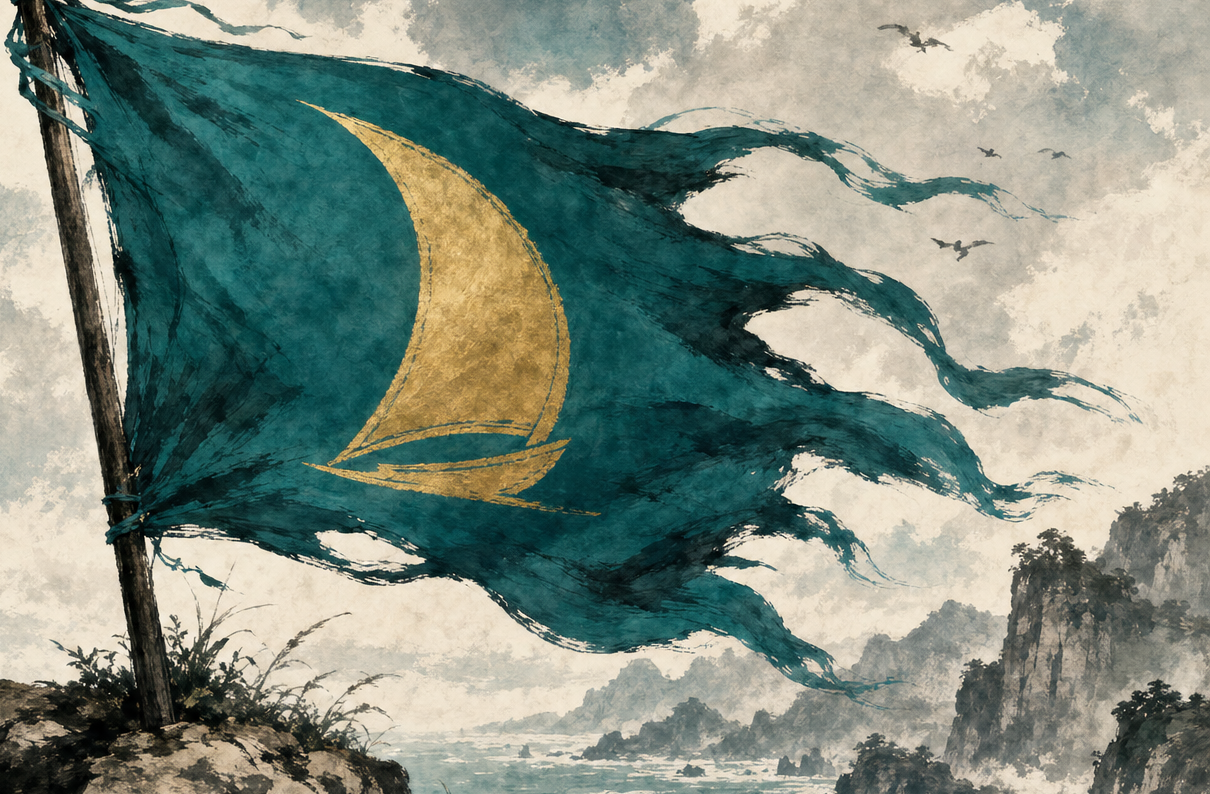
Qiānjīn
“On the winds of fortune”
Wealth is freedom. Success depends less on what you know than on whom you know, and adaptability is the key to opportunity. The Merchant Princes champion individual liberty and the virtue of living one's most pleasurable life by whatever means one sees fit, and the importance of amassing the fortune to sustain it.
A kingdom of traders and travelers, first to adopt new technologies and foreign fashions. Tradition holds little sway here, and the population is the most diverse of any kingdom. Status is fluid and transactional: wealthy merchant commoners command near-noble respect, while impoverished nobles endure near-common treatment. The arts flourish as rich patrons compete for prestige through cultural sponsorship. The cities are the loudest, most colourful, and most chaotic places in the Empire.
Colonnaded market-arcades, ornate balconies, tiled facades with neon signs in classical calligraphy, wrought-iron railings draped with silk banners, Art Nouveau storefronts beside traditional teahouses. Every surface serves as advertisement or statement.
Locals mix traditions with abandon: a qipao in foreign silk with a feathered headpiece, a pinstripe suit in plum with an embroidered waistcoat, pearl ropes over everything. Fashion changes with the seasons. Accessories are maximalist: rings on every finger, elaborate hair ornaments, lacquered cigarette holders.
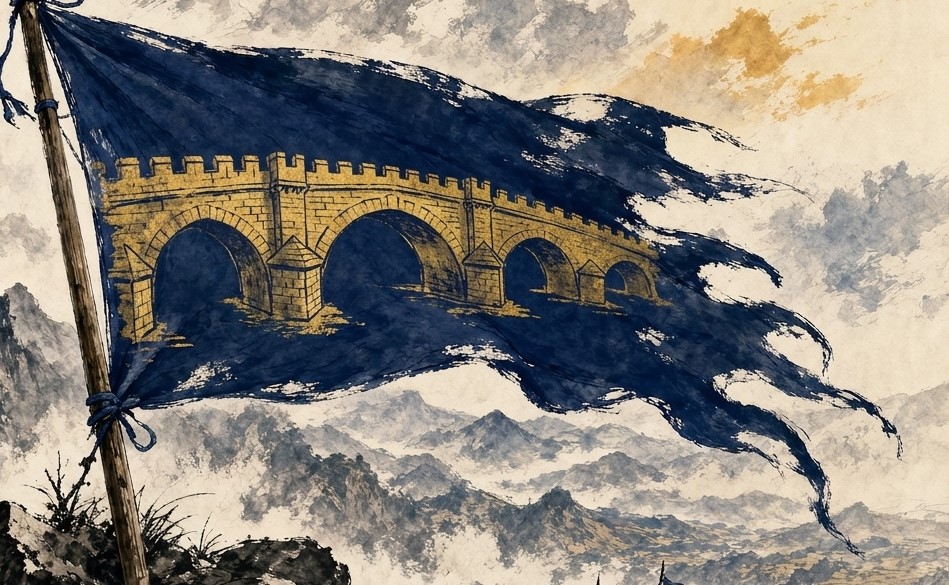
Sìshuǐ
“All returns to the river”
Life flows like a river, nourishing the land, finding a path around every obstacle. Never stopped, only redirected. All water drawn from the river returns to it. This house counsels patience, tolerance, and a light hand that steers natural flows rather than forcing them.
The Imperial Court is a cosmopolitan space that draws and accepts people of all types from across the empire. A heavy emphasis on balance manifests in elaborate seating arrangements, gift exchanges, and formal procedures. Members of the Imperial family are renowned for their skill as mediators, diplomats, and administrators who pride themselves on seeing all sides.
Sweeping curved rooflines over pale stone and dark timber, built along and over waterways. Bridges, canals, and reflecting pools are integral; modern touches include curved chrome railings along marble canal-walks and fan-shaped windows in government halls.
Layered, flowing garments in navy and ivory with gold trim. Court dress involves elaborate multi-layered robes with water-motif embroidery. Modern Amniran style favours long double-breasted overcoats over high-collared suits, silk scarves, and jade accessories.
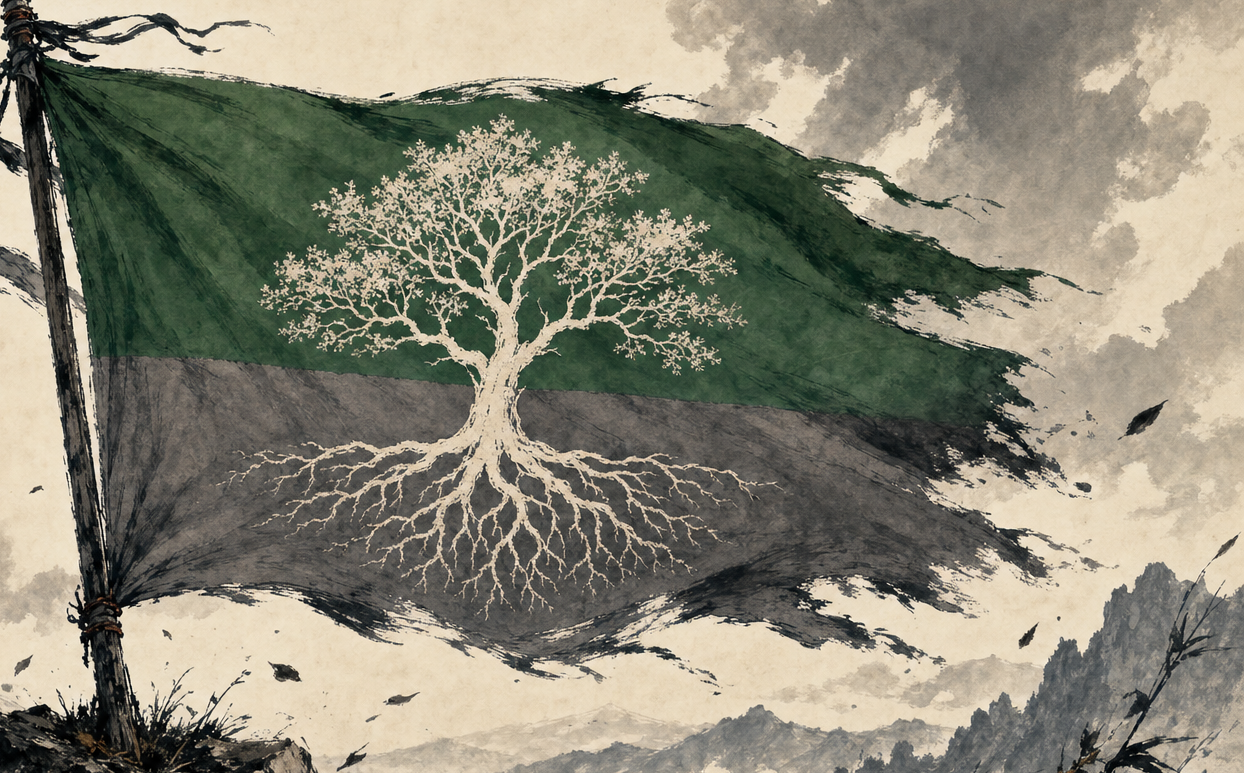
Táimí
“Every Stone Has a Name”
The world is alive, and every part of it has a voice worth respecting. Throughout the wider empire, people pray to spirits and offer sacrifices, yet they draw a clear line between religious life and daily life, between those who dedicate themselves to the spirits and those who do not. In the spirit lands of Numinveld, no such line exists. Everyone trains from childhood to remain aware of the spirits at all times and to weigh their wishes in every action.
Radically decentralized. Each village, valley, and river-bend has its own spirits, and consequently its own customs and laws. The spirit lands often seem uncivilized to outsiders: roads wind around sacred groves, and fertile fields lie untilled at the wishes of local spirits. Yet this is also the land of the most striking natural beauty, and its people are largely content. Few hierarchies persist; noble houses and common folk share a closeness rare in other lands. Governance: The Monarch, currently Jīnghún Liradi of House Liradi, rules Táimí as its sovereign. Beneath the throne, authority is regional rather than centralized: three governors administer Táimí's regions on the crown's behalf, Xīnchái Tiānláng-Liradi over the Eastern Táimí Region, Qīnghǔ Yún-Liradi over the Northeastern Táimí Region, and Hǔfǎn Dúgū-Liradi over the Western Táimí Region.
Buildings curve around the landscape rather than impose upon it. Walls hug boulders, living-root bridges span ravines, homes burrow into hillsides. Timber and undressed stone dominate. Even in towns, buildings stay low and organic, with spirit shrines at every threshold.
Layered, earth-toned clothing with hand-woven textiles; each village keeps distinctive patterns. Spirit-marks (painted or tattooed symbols of local spirits) are common. Where modern fashion appears, it adapts: a tweed jacket lined with spirit-warding embroidery, wooden toggle-buttons carved with local sigils. Adornments tend toward natural materials: bone, horn, polished stone, woven grass.
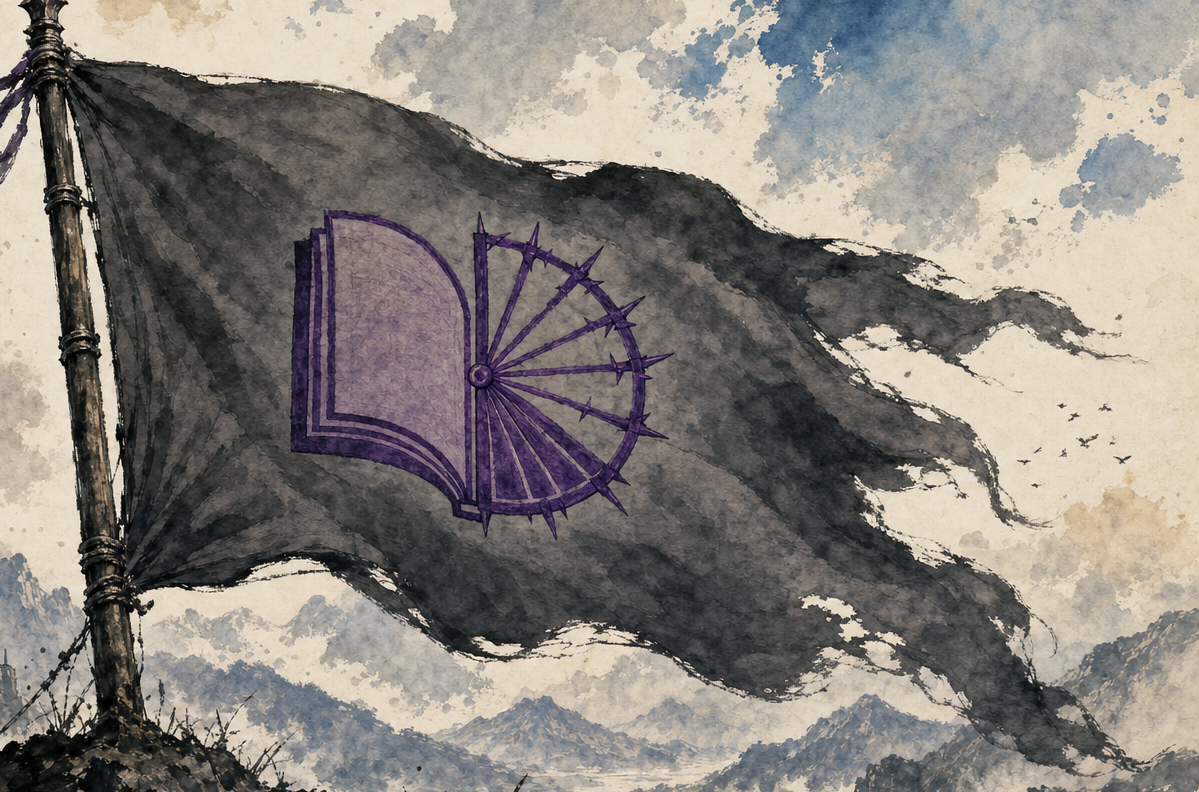
Tōngzhì
“The Truth Serves”
Knowledge is the source of all real power. Any problem can be solved once it is understood well enough. The kingdom maintains some of the greatest libraries and intelligence networks in the empire. Its people dedicate significant resources to spiritual practice, though they emphasize understanding spirits rather than simply venerating them.
A cohort of quiet, efficient bureaucrats manages the society, overseeing and coordinating the scientists, engineers, archaeologists, and spiritualists who drive much of the kingdom's innovation. Colleges and schools abound, linked by a complex network of entrance examinations. Many of the administrators are, in fact, trained assassins and spies who use knowledge-seeking expeditions to gather intelligence for the court and keep their wards in line. The Court publicly denies that any training schools for these agents exist; one can never tell whether a student lauded for admission to an elite academy is studying the principles of engineering or of poison.
Clean lines, pale stone, and precisely proportioned windows. Buildings run deeper than they appear: libraries extend underground, offices hide secret rooms, and corridors connect buildings beneath the streets. A Scipian government building resembles a 1930s university library: austere limestone, bronze lettering, an air of quiet authority. The most dangerous rooms look like the most boring ones.
Muted colours, precise cuts, quality fabrics without flash. A local bureaucrat wears a perfectly fitted charcoal suit with a single subtle pin. Scholars favour long coats over mandarin-collar shirts. The one indulgence is eyewear: the kingdom is known for distinctive spectacles, and frame quality serves as a quiet marker of status.
Zhūwān
Zhūwān, Pearl Bay, is the largest city in the Àolǎng Empire and the only place where all five kingdoms meet the rest of the world. The Jīnhé river empties here into a deep natural harbour, and the docks have always been loud with the business of people who have something to sell or something to hide. Inside its walled peninsula a traveller can shop the daily-lottery Floating Market, soak away wounds at the Cuìquán mineral springs, sail out to the Lotus Boat for a private suite, dance into noble society at the Crystal Ballroom, or step inside one of six foreign embassies whose ambassadors smile over treaties the Empire signed under duress. South of the river lie the South Ruins, the burned remains of the lost half of the city, still considered cursed forty-seven years after the Fire of Zhūwān.
Àolǎng Empire
Beneath skies the colour of beaten bronze lies Àolǎng, the Profound Radiance, an island realm of mountains and grassy plains. Its spine is the Jīnhé, the Gold River, which winds from the snowfields of the central massif down to the brackish reedlands of the coast. The great port of Zhūwān, Pearl Bay, is the largest and wealthiest city and the main trading port with the outside world.
The realm is held in trust by House Lanaris, whose heirs wear a Bracelet known as the Mandate of Heaven. Two centuries ago, the Empress Yuèhé climbed alone to the Cloud Cleft and there made covenant with the river-dragon Liúhǔ, who poured a measure of his spirit into a band of carved jade. So long as a Lanaris of true blood bears the bracelet and rules with virtue, the Mandate holds, and the dragon’s breath turns aside both plague and pretender.
Sìshuǐ, of four rivers and ten thousand bridges, is the imperial heartland and seat of the court. Táimí of the singing forests keeps converse with hill-spirits and lesser gods. Jīnjiǎ, Gold Scale, raises duellists whose names are written in blood upon white silk. Qiānjīn is the kingdom of merchant princes, where every counting-house is a small palace. Tōngzhì breeds scholars, archivists, and the quiet listeners of the Ministry of Silence.
Today the Radiance shines uneasily. Telegraph wires crisscross the rice terraces; ironclad gunboats of the Aldermark Commonwealth ride at anchor in Zhūwān harbour, their consuls smiling over unequal treaties. In every kingdom, those who would buy foreign cannon quarrel with those who would burn the mills, and the bracelet on the young sovereign’s wrist grows warm more often than comfort allows.
Àolǎng Culture Guide
Romance of Five Kingdoms is a romantasy wuxia game set in the Àolǎng Empire, an island realm a little smaller than France, drawing on Chinese-influenced fantasy in the way that a typical Western fantasy draws on medieval Europe. It is not historical China. There is no Confucius, no Buddha, no Tang, Ming, or Qing dynasty. The gods are not borrowed; the dragons are not borrowed; the philosophy is not borrowed. Everything in this world is invented for this world. Please do not import real Chinese history, mythology, or religion into your roleplay. If something feels like it would be a reference, it almost certainly should not be.
The world sits at roughly a 1940s level of technology. Telegraph wires cross the rice terraces; the great port of Zhūwān has neon signs in classical calligraphy beside traditional teahouses; trains and gunboats exist and matter.
Honorifics
Honorifics are an optional courtesy that can carry a lot of conversational weight. The four short particles are Wei (the addressee is your senior), Xia (the addressee is your junior), Me (the addressee is your ally), and Di (the addressee is your honored rival). They combine: Weime is a senior ally, Xiadi is a junior rival, and so on. They shift sentence to sentence as the topic shifts. Speaking without one is neutral and unremarkable; using one is respectful, and a -di form is the polite way to disagree without disrespect. See help honorifics for the full table.
Bowing
It’s customary to bow to people upon greeting them, bowing deeper and longer conveys more respect.
Fashion
The technology level of the Empire is roughly 1940s, any fashion up to this point is acceptable, drawing from most any culture. While the most common garbs are robes, dresses and suits anything which doesn’t seem overtly modern is acceptable. It’s a fantasy setting, so outfits can also be more varied or elaborate or creative than they would have been historically. It’s also an era of refinement however, outfits that show copious amounts of skin or the like are considered in extremely poor taste.
Gender
The empire is gender-balanced. Women rule kingdoms, command armies, run merchant houses, and duel in the streets on equal footing with men. Sects, orders, and the imperial bureaucracy are all open to anyone. While sexism does exist, it’s more rare and repressed than open, similar to modern society.
Sexuality
Àolǎng Culture, particularly that of the higher classes is very concerned with dynasty and family. Gay marriage is not legal and marriages are usually arranged and inescapable unless one joins the Starlight Order. However, outside of this obligation, there’s very little concern with someone’s sexuality and lavender marriages are not uncommon.
Names
Names in Àolǎng are always given forename-first, regardless of which cultural register a name reads in. Yuèhé Lanaris is forename Yuèhé, house Lanaris. The empire is intentionally a cultural mix: not every name will sound Chinese, and that is canon. Ambassadors and certain noble appointees use a hyphenated <birthname>-<housename> form (for example, Sháo-Lanaris) to mark their formal role.
Class and cultivation
Cultivation, the refinement of qi into superhuman martial ability, is open only to those of noble blood. Commoners cannot cultivate; the rare exception is always quickly explained as a hidden noble bloodline rather than a true exception to the rule. This is not just flavour, it is class: cultivators heal faster, hit harder, age slower, and command rooms by walking into them. Your character’s relationship to cultivation tells everyone in the room where they stand. Cultivation is martial and herbal, not religious; cultivators are not monks, and the sects are not temples. Nobles being the only ones who can cultivate is generally seen as clear evidence of their superiority over the commoners and their right to rule. See help cultivation.
Drugs
Opium is a popular drug in the Empire, and tends to fluctuate between different levels of legal, illegal and decriminalized with no Kingdom finding a particularly successful strategy for dealing with it.
Legal Structures
Towns are ruled by a Magistrate, and regions by a governor. While there are sets of official laws these can be overridden by the respective official. As members of a royal house you likely will never be convicted of a crime, but if you bring enough dishonor to your house you may be quietly disappeared.
Honor
Honor is very important, both Honor of the family and of the individual. Being truthful, righteous, loyal, respectful, brave, and polite are all considered very important.
Spirits
The world is animist. Almost every river, mountain, threshold, hearth, and human concept has an associated spirit, and the greatest of them take the form of dragons. Spirits can be kind, indifferent, or malevolent according to their nature. Táimí, the Singing Forests, treats spirits as part of daily life; other kingdoms keep more of a wall between civic and spiritual life, but no one denies the spirits exist. Shrines on doorways and at street corners are not decoration; they are functional. See help spirits.
Magic
Beyond cultivation, the main form of magic is blood sorcery, powered by sacrifice. It is not inherently evil. A village witch sacrificing a chicken to ward a barn is doing blood sorcery; so is a self-immolating martyr saving a town. Most practitioners, however, are malicious, and cultivator blood is the most prized fuel of all. See help "blood sorcery".
The five kingdoms at a glance
- Sìshuǐ is the imperial heart, ruled by House Lanaris: cosmopolitan, water-themed, diplomatic.
- Táimí is the Singing Forests: animist, decentralised, every village a law unto itself, the most “different” daily-life of the five.
- Jīnjiǎ is martial and hierarchical: ranks, duels, brass and ox-blood.
- Qiānjīn is the trader kingdom: loud, plural, fashion-forward, status by wealth not birth.
- Tōngzhì is the scholar kingdom: quiet bureaucrats, libraries, and one of the empire’s most dangerous intelligence apparatuses behind the spectacles.
Read help kingdoms for the full sketches, and pick the one that fits your character rather than defaulting to the imperial one.
The political moment
The empire is under pressure. The Commonwealth of Aldermark, the colonial Western power, supplies the empire’s imported technology and is steadily extracting concessions through unequal treaties anchored in Zhūwān harbour. Shirogane, a long-standing rival civilization across the water, is a separate strategic problem.
Sects, schools, and orders
These are not interchangeable.
- Schools teach martial styles. The four great schools are Ember Fist, Veiled Grace, Mirrored Tempest, and Radiant Chorus.
- Sects are voluntary associations with shared agendas, philosophies, or trades. Some are public, some hidden, some criminal.
- Orders like the Starlight Order are monastic, requiring renunciation of family and rank. Joining one is a permanent identity shift.
See help sects and help "the starlight order".
Foreign Ethnicities
The empire is a mixed people
You can build a character of any ethnicity, with a name and a face drawn from any tradition, and that character belongs in the Àolǎng Empire as fully as anyone born under its bronze skies.
Origins
Less than a thousand years ago, the world was in what’s now called the Age of Dreaming, this was an era of unparalleled magic and everyone could travel across the world at the speed of thought. There was little to no distinctions between cultures and ethnicities.
When the age of dreaming ended people were scattered to different lands and cultures became more distilled, but 1000 years is a short time in civilizational history and individuals with other cultural names, other ethnicities, and other cultural artefacts are as much a part of the Empire as any other.
In practice
No one will blink twice if a character doesn’t have an East Asian Ethnicity, or name, or sense of style.
The setting is a fictional world, not based on history or mythological China. China’s histories and legends influence this world in a similar way to Western Europe’s histories and legends influenced Middle Earth.
Royalty
This is also true of royalty, Royal and noble families are no less likely to have different ethnic backgrounds or cultural trends.
Five Kingdoms Themes Guide
Romance of Five Kingdoms is a romantasy wuxia game. It is unapologetically dramatic, and the systems, lore, and culture are all bent toward a specific cluster of tones. Knowing the themes the game is reaching for will help you write a character who feeds into them rather than fights against them. None of this is a checklist; pick what speaks to you. But if your character touches none of these, you may struggle to enjoy yourself.
Wuxia
The bones of the game are wuxia. Wandering martial heroes, codes of honor, sect rivalries, secret techniques carried from one master to the next, breathtaking duels on rooftops and in bamboo groves. Style matters as much as outcome.
Cultivation
Cultivation is the preoccupation of most PCs, to grow ever stronger in their martial and supernatural abilities through practice, meditation, and refinement of pills. Some even take a strategic approach to romantically powered cultivation. Cultivation is the main progression mechanic in the game, and wanting to enhance your qi and learn new techniques provides a strong driver for your character to do things. As long as your character cares about cultivation it should generally be easy for you to have reasons for them to get involved in the game’s systems and with other PCs.
Adventure
The empire is large, varied, and mostly underexplored by any one character. There are spirits in the rivers, monsters in the high passes, ruins under the rice terraces, smugglers in the Zhūwān harbours, and trains that will take you somewhere you have never been by morning. The world of the game is vast and one of the main themes involves going out into the wilderness of the Jianghu and having wild martial artist adventures, whether those are battling monsters or solving mysteries.
Action
Many of the game’s systems feature high octane action, from stealthy heists, to epic battles or frantic chases. In combat characters can be fighting groups of enemies and leaping from tree branch to tree branch while a group of thugs fire machine guns at them from below.
Noble Intrigue
Your character is a Prince or Princess of one of the royal houses, as well as likely having loyalties to their martial school and perhaps one or more sects as well. This is part of the fantasy of the setting, you’ll go to fancy balls, wear absurdly expensive outfits, scheme and plot over expensive teas and whiskeys and work to dominate others through superior social maneuvering as much as martial footwork. In the high reaches of society a well placed backhanded compliment does more damage than a well placed backhand. Both the upsides of the royal fantasy, extravagance and importance, and the downsides of the fantasy, duty, obligation, are part of the setting.
Forbidden Romances
With most marriages being arranged and qi growing stronger the more opposed you are to your romantic interest the setting strongly encourages romances which are forbidden or between enemies or rivals. The friction between who you want and who you should pursue is core to the theme and plays out in long, slow burning flirtations that often ultimately explode in qi-unleashing passions. While romantic obstacles like this are common in Romance stories they are unusual in RPGs, and it’s worth thinking about how your character will interact with these themes.
Advice
This setting is a whimsical, high fantasy action-adventure romantasy setting. It isn’t grimdark fantasy, nor western dungeons and dragons style fantasy, or a comedy setting. If you try and play a character that doesn’t suit the theme you’re unlikely to have a good time. The best characters will all involve elements of martial arts cultivator, adventure, noble, and romantic lead. How you combine those elements or spin them is up to you. While there are no rules against making for instance a character disinterested in adventure, or in romance you will be locking yourself out of significant amounts of the story and potentially end up battling the game’s mechanics in a way that is unlikely to be enjoyable.
help "aolang culture guide"for the cultural ground rules.help cultivationfor the mechanical and dramatic centre of the world.help sectsfor the orders, sects, and schools that organise most adventures.help kingdomsfor the five kingdoms and their distinct flavours.help honorificsfor the optional courtesies the empire uses to place friend, rival, senior, and junior.
Commonwealth of Aldermark
The Commonwealth of Aldermark is a parliamentary mercantile power seated across the western ocean, governed by an elected Assembly of Burgesses and a smaller Lords’ Bench, with a sovereign whose role is ceremonial. Its citizens speak of liberty, charter, and free trade in the same breath as gunboats and coaling stations, and they are entirely unembarrassed by their empire. Aldermen reckon the world in ledgers: every port a column, every treaty a clause, every colony an investment expected to return. They consider themselves the natural tutors of younger nations, by which they mean every nation but their own.
Aldermark seems to be the only known nation that has no magic at all, but their technology seems to surpass all others. Rumors are that they slew their gods in return for industrial power. They are known to have several ‘ever-engines’ which require no fuel and run forever, these power their most important factories.
Aldermark first traded with the empire in 615, bartering clocks and woolens for tea and silk. By 809 they had pressed their advantage into a formal concession at Zhūwān, where their warehouses, drydocks, and counting-houses now line the southern quays. From there flow the steam engines that drive the empire’s new mills, the rifles that arm both loyal garrisons and unsavory others, and the patterns for the factories rising along the coast. From there also flow crates marked as medicine, tea, and lamp oil, whose true cargo rots the lungs and purses of half a province. The embassy above the concession is the only foreign banner permitted to fly inside imperial soil.
The arrangement breeds quarrel. The Lamplighters argue openly that the empire should accept Commonwealth tutelage and join as a chartered member; the Chainless Compact answers that no chain is heavier than a friendly one, and the Unforged refuse the bargain on older grounds. The River Wardens shadow every Aldermark agent who steps beyond the concession gates, and have done so with redoubled vigilance since the Lotus Quay massacre of 901, an affair in which Aldermark’s hand was loudly denied and quietly suspected.
Shirogane
Shirogane is an archipelago kingdom across the Eastern Sea, a chain of pine-cliffed islands ruled from the white-walled capital of Hakurei. Its people speak their own tongue, write in a script borrowed and then bent away from ours, and order their houses around clan loyalty, sword-saint lineages, and shrines to sea and storm. Their warriors are feared across the waves: disciplined infantry, peerless single-blade duelists, and a navy of lacquered war-junks that move like cormorants. Three invasions still live in the empire’s memory. In 576 their fleet broke on the rocks of Qiānjīn in a brief, brutal raid. In 678 they returned and held the coastal prefectures of Jīnjiǎ and Qiānjīn for ten years before being driven back. In 771 they came a third time, repelled only when the young Emperor Hǔjūn called down the power of Liúhǔ on the burning shore.
Today the two realms keep a formal peace, signed in ink and watched in iron. Envoys exchange gifts at the solstices; warships shadow each other along the trade lanes; neither side names the other a friend. It is a rivalry that breathes.
How a citizen feels depends on where she was born. In Jīnjiǎ, grandmothers still spit at the name Shirogane and bar their shutters on the anniversary of the occupation. Sìshuǐ’s court diplomats prefer a cool, courteous distance, all bows and no warmth. Qiānjīn merchants, whose ledgers love the silver that comes off those island ships, trade carefully, smile thinly, and keep one hand near the knife.
Cultivation
Cultivation is the refinement of qi through disciplined breath, sworn forms, and the ingestion of herbal pills distilled from rare mountain flora and stranger things besides. A practiced cultivator can shatter stone with an open palm, stride across water, deflect bullets from their skin, wield the elements like weapon, and perserve enough vitality that they never pass beyond middle-age. It is well-established that only those of noble blood are capable of Cultivation, and while occassional commoners stumble upon it’s ways it’s always quickly established that they had some long hidden noble blood.
The noble houses cultivate openly, and beneath them the four great schools shape the discipline into rival traditions: the Ember Fist, the Veiled Grace, the Mirrored Tempest, and the Radiant Chorus. Sect elders, often centuries seasoned, guard the higher pill formulas as jealously as any crown jewel.
Qi deepens through romantic chemistry, and most fiercely between rivals whose passions are sharpened by opposition. Two cultivators circling one another in suspicion, longing, or open enmity will both ascend faster than either could alone. Court matchmakers, sect rivals, and scheming dowagers exploit this without shame, and half the duels recorded in the histories are also love letters.
Blood sorcerers covet cultivators above all other prey. Refined qi saturates the blood, and a single cup drawn from a sect disciple outweighs barrels taken from the commonborn. See help "Blood Sorcery". Shades are also drawn to culviators, their qi making the creatures feel some semblance of life’s warmth once more.
The two arts stand at opposite poles of the empire’s regard, and a cultivator does not walk both roads at once. Cultivation is the noble’s open path: martial, herbal, honoured in the daylight, and earned only through the slow refinement of one’s own qi. Blood sorcery buys its power from a life laid down, and even where a village rite passes for harmless the art keeps its place in the empire’s underside. There is no law of nature that bars a noble from learning to spill blood over a sigil, and the histories whisper of a few who did. But for one whose own veins are the sweetest fuel a sorcerer could hope for, the prey turning predator is reckoned the foulest of betrayals: it spends the honour of house and self, it brands the cultivator a deviant in the eyes of every sect, and it draws the Unbleeding Seal, who ride against the sacrifice arts in all their forms and care nothing for noble blood when they catch its scent. A cultivator who hungers for swift power has the cultivation arts and the duelling rivalries that sharpen qi; the sacrifice road offers only a name no honourable house will own.
Blood Sorcery
Blood sorcery draws its power from the simplest and oldest currency of the living world: a life given in exchange for a working. A chicken’s throat opened over a chalked sigil might still a fever or sour a neighbor’s wine. A bullock bled at the village stone can turn a season’s hail aside. A grown man or woman, willing and prepared, can pour out enough force to raise a ward around an entire town for a generation. The art takes no side. What the sorcerer asks for, and what the sorcerer is willing to kill to get it, is the only moral question that matters, and on that question practitioners scatter across the whole range from saintly to monstrous.
The most infamous of them gather under the banner of the Scarlet Meridian, a cult that holds spilled blood to be the truest scripture and pursues workings of appalling scale. Far more numerous, though, are the solitary practitioners: hedge-witches, exiled scholars, ambitious bandits, grieving widows. In some remote valleys the village ritualist is a respected elder, and the spring lamb offered at the boundary stone is no more sinister than any other rite of the calendar.
Cultivators bleed differently. The disciplines refined in the body make their blood a fuel of terrible potency, and sorcerers hunt them with patient hunger. This is among the older reasons the noble houses keep the cultivation arts behind closed gates and unmarked names; a known cultivator on the road is a walking offering.
Against all of this stands the Unbleeding Seal, whose oath admits no gradient. To them a child’s lamb at a shrine stone is the first step on a road whose end is the Scarlet Meridian’s altars, and they ride against both with equal severity. Their purges have broken cults and saved cities. They have also burned out wise-women whose worst crime was a sparrow at the solstice, and in many country districts the white seal on a rider’s banner is feared more than any sorcerer.
Honorifics
Xiame - Junior ally
Weime - Senior ally
Xiadi - Junior rival
Weidi - Senior rival
Empire naming convention: (honorific) (first name) (surname)-(house name).
An honorific pairs a status half with a stance half, always spoken together as one of the four words above. Wei marks the person addressed as the speaker’s senior, Xia as the speaker’s junior. Me marks them as an ally, Di as an honored rival or enemy. A bare Wei, Xia, me, or di is never a form of address on its own.
Honorifics are optional. Speaking plainly, with no honorific at all, is neutral: nobody remarks on it, and no one is owed one. Using an honorific is a courtesy, a sign that you have taken the trouble to place the other person. The one pointed use is the stance half: addressing someone as Weidi or Xiadi, or shifting from -me to -di mid-conversation, is the empire’s way of disagreeing while saying “no disrespect”, opposition declared inside a form that is itself still polite.
Who counts as senior. A noble is senior to a commoner. Within one family, the more important position is senior. Within one sect or martial school, the higher rank is senior. Otherwise it usually goes by age. Like everything about honorifics it stays context and subtext dependent, and can shift sentence to sentence with the matter at hand.
Who counts as an ally. People of the same family, sect, or school, and anyone currently working together, such as members of one adventuring party. Who counts as a rival. Anyone you are sparring, fighting, arguing, competing, or flirting with. Di is honored opposition, not hatred: in courtship and between lovers it carries a famous flirtatious edge.
Speakers also use honorifics as second-person pronouns, especially in one-on-one conversation, so “Weime, is the abbot within?” means “you, my senior and ally, is the abbot within?”
Noble society prizes the subtle use of honorifics to convey meaning without direct speech: a shift of one half can concede a point, mark a turn in allegiance, or advance a courtship without a single word of open disagreement. In romantic relationships, Wei also conveys associations with topping, penetrating, and traditional masculine relationship roles; Xia conveys the opposite. Shifting honorifics. The above outlines the default honorifics, but it is common for defaults to be overridden based on the current conversation or circumstance. Someone winning a fight against a senior in a martial school may switch to a Xia- prefix mid-fight; someone reading a statement as flirtatious might switch to a -di suffix. Shifting honorifics is often considered the mark of a sophisticated speaker, and is more common among the nobility.
Quick reference
| Situation | Honorific |
|---|---|
| Anyone, neutrally (strangers included) | none, perfectly polite |
| Your master, teacher, or a sect elder | Weime |
| A lower-ranked disciple of your sect or school | Xiame |
| A party member older or higher-placed than you | Weime |
| A party member younger or lower-placed than you | Xiame |
| A parent, elder sibling, or your house’s head | Weime |
| A younger sibling or junior cousin | Xiame |
| A noble, when you are a commoner working with them | Weime |
| A commoner, when you are a noble working with them | Xiame |
| A senior you are sparring, debating, or competing against | Weidi |
| A junior you are sparring, debating, or competing against | Xiadi |
| An elder you must refuse or contradict politely | Weidi |
| Someone you are flirting with | Weidi or Xiadi |
History
The Age of Dreams Ends
- 0End of the Age of Dreams, a semi-catastrophe in which magic recedes from the world, the great wonders collapse, and long-distance travel collapses to foot and sail. Because every region had mingled freely during the Age, the closing of the gates leaves the island permanently multicultural and multiracial.
The Founding of the Kingdoms
- 253The Great Master, discovers the secrets of cultivation and founds a school high in the Wànshí range.
- 287The Great Master dies. His five greatest pupils disagree about the future of the school and depart, settling in different regions of the island and becoming the ruling families of the five kingdoms: Lanaris in Sìshuǐ, Liradi in Táimí, Zhancalius in Jīnjiǎ, Jindoro in Qiānjīn, and Shuveri in Tōngzhì.
- 339The five kingdoms stabilise behind their distinct philosophies and capitals. Each royal line guards cultivation as its closest secret; any commoner found practising is quietly declared a long-lost noble descendant and absorbed.
- 432The Inkstone Society begins as a loose confederation of court historians and itinerant playwrights moving between the five kingdoms, becoming the empire's main thread of cross-kingdom cultural memory.
- ~478The Ninth Pouch, originally a mutual-aid society among the riverside laborers of eastern Qiānjīn, formalises its ranked pouch system. Within a generation its branches reach every major city.
The Shirogane Wars
- 576First Shirogane invasion. The fleet lands on the eastern coast of Jīnjiǎ and presses inland; Jīnjiǎ repels the campaign after two years of heavy losses. Its military hardens thereafter into the duelling culture it still carries.
- 579The war forces the royal houses to extend cultivation beyond strict royal blood to the wider nobility. The first official cultivation schools open as state institutions and over the next century distil the patchwork of regional styles into the four great schools recognised today: the Ember Fist, the Veiled Grace, the Mirrored Tempest, and the Radiant Chorus.
- 615First contact with the Commonwealth of Aldermark. A single trader-galleon makes harbour at the small fishing village of Zhūwān; limited trade in salt, dye, and curiosities begins.
- 641After a string of blood-sorcery atrocities, surviving family of the victims found the Unbleeding Seal, a militant order dedicated to the eradication of blood sorcery in all its forms.
- 678Second Shirogane invasion. After heavy imperial naval losses, Shirogane forces occupy the coastal regions of Jīnjiǎ and Qiānjīn for eleven years.
- 688The empire pushes Shirogane from the island, and reconstruction begins. The southern kingdoms, which bore the brunt of the occupation, never forgive the northern kingdoms for what they regard as slow and grudging support.
The War of Five Banners
- 697Jīnjiǎ declares war on Tōngzhì over the broken support pledges of the occupation years. Qiānjīn joins on the side of Jīnjiǎ; Táimí enters on the side of Tōngzhì. Sìshuǐ alone stays impartial, declaring Fēiyín Dū a neutral mediation ground.
- 697 to 722The War of Five Banners rages for twenty-five years. Kingdoms occasionally switch between allied and independent, but the alliance shape stays mostly stable for the full duration. The war reshapes borders, depopulates the central forests, and leaves all five kingdoms financially exhausted.
The Founding of the Empire
- 723Queen Yuèhé Lanaris of Sìshuǐ, having watched the war ravage her kingdom, travels up the mountain to the mouth of the Jīnhé and pleads with the dragon spirit Liúhǔ for audience. (See the fable of Yuèhé.)
- 724Empress Yuèhé Lanaris, now bonded to Liúhǔ through the enchanted bracelet that becomes the founding regalia of the Imperial House, routs the armies of Jīnjiǎ. Thus begins the formation of the empire.
- 727All five kingdoms have pledged to Empress Yuèhé. The War of Five Banners ends. The Àolǎng (Profound Radiance) Empire is born, with House Lanaris as its imperial house and Sìshuǐ as its imperial seat.
- 756Zhūwān, the port town that has become the hub of Aldermark trade, officially becomes the largest city in the empire by population. Qiānjīn's wealth, channelled through Zhūwān's customs houses, begins to rival that of all the other kingdoms combined.
The Mandate of the River
- 759Empress Yuèhé Lanaris dies. The Mandate of Liúhǔ passes to her eldest son.
- 761Emperor Mòchuān Lanaris declares Zhūwān an independent zone, free of Qiānjīn jurisdiction, its customs revenue to be shared by all five kingdoms equally. The decision wins broad popularity outside Qiānjīn.
- 763Assassins kill Emperor Mòchuān. The Mandate passes to his four-year-old son. Empress Dowager Dìngshuǐ Lanaris assumes regency on behalf of the boy emperor.
- 764The Dowager marries the five-year-old Emperor Hǔjūn Lanaris to the sixteen-year-old Princess Rújīn Jindoro of Qiānjīn.
- 764The Dowager forms the the River Wardens as a small covert order answering only to Imperial Seat , charged with investigating threats the magistracy cannot reach. Their tokens grant deliberately vague extralegal authority.
- 771Third Shirogane invasion. After initial Shirogane success against the imperial fleet, the twelve-year-old Emperor Hǔjūn manifests the power of the dragon over the eastern coast and scatters the Shirogane fleet in a single afternoon. The shock ushers in a new age of imperial unity. Empress Dowager Dìngshuǐ retires to the floating palace of Yúnhé.
- 778The Compact of Three Lanterns, held at Cángjìng, formalises the modern lineages and curricula of the four cultivation schools. Each school accepts imperial license; the empire in turn pledges to leave senior masters out of court politics.
- 809The Aldermark Commonwealth opens its first formal trading concession in Zhūwān. Imported steam engines arrive within five years; the Tōngzhì engineering colleges acquire most of the early stock, and Aldermark factories begin to fill the harbour quarter.
- 822Engineers complete the Imperial Main Line between Fēiyín Dū and Cángjìng, the empire's first long-haul railway.
- 831Emperor Hǔjūn Lanaris dies after a sixty-eight-year reign. The Mandate passes to his eldest daughter, Empress Yàohóng Lanaris
The Reign of Empress Yàohóng
- 841Aldermark establishes a permanent ambassadorial residence in Zhūwān. The Lamplighters first appear in pamphleteering circles around the same time, arguing that the empire's future lies in joining the Commonwealth.
- 852The Chainless Compact takes shape during the long Zhūwān tariff debates, a loose confederacy of regional nobles and disaffected officials who reject the Imperial Bracelet as an unholy spirit-union and call for a return to five-kingdom self-rule. Empress Yàohóng tolerates them publicly.
- 867Empress Yàohóng Lanaris dies. The Mandate passes to her eldest son, Emperor Héliú Lanaris.
The Reign of Emperor Héliú
- 872The Fire of Zhūwān. A lamp knocked over in a southern Zhūwān merchant's household during a private murder kindles a fire that the city's officers cannot quench. The blaze consumes the whole southern half of the city before the Jīnhé river halts it. Witnesses report the manifest form of Shíliè, the Spirit of Honor, walking the burning streets as a great stone lion with eyes of fire. The southern half stands abandoned and cursed ever since, drawing only cultivators willing to risk the catacombs beneath it for the rare ingredients that grow in cursed ground. Also known as the Great Fire, the Southern Fire, or the Fire of Honor.
- 874Joint imperial-Tōngzhì engineering completes the Cāngbō Xiàn (Dark Wave Line) between Táiyōu and Cángjìng. The Jīn Àn Xiàn (Gold Bank Line), the longest railway in the empire, opens its first segments along the southern coast.
- 886The Broken Copper Panic. A forged tariff circular, traced eventually to a faction within the Qiānjīn merchant princes, destabilises the empire's coinage standard for three months. Emperor Héliú creates the official Gold Dollar standard currency, each paper bill backed by gold by the state and developed with unique numbering and the best anti-counterfitting technology. While stabalizing the currency remains far too expensive for most people to use.
- 896Jīnyǔ Lanaris, then the second daughter of the imperial house, weds Cǎiqiú Lanaris of a riverward branch of the Lanaris line. The first of their three children, the future Crown Princess Yàojīn Lanaris, follows within the year.
- 901The Lotus Quay incident. Most evidence pins on Mòlóng, the Stranger King, a forty-dead ethnic riot in Zhūwān's foreign quarter that the River Wardens silence only by shutting down the rumour-mills behind it. The Aldermark ambassador's role in either inflaming or quieting the violence remains contested.
- 905The Black Silt Fever spreads along the western Tōngzhì rail corridor. Investigators trace it to a newly-awakened marsh spirit; Governor Zhāng Wèifèng's quiet year-long negotiation ends the outbreak peacefully.
- 912Emperor Héliú Lanaris dies. The five kingdoms offer the Mandate first to his eldest son, Prince Cairan Lanaris, who declines and renounces the world for a hermit-mountain order in the southern Wànshí range. After three months of formal mourning and consultation, the Mandate passes to Héliú's second daughter.
The Present Day
- 912Empress Jīnyǔ Lanaris takes the bracelet at thirty-eight in the river court of Fēiyín Dū. Since the founding she is the first sibling-second to wear it, and the first sovereign to take the throne by acclamation rather than primogeniture.
- 918An imperial inquest names the Ascending Path openly for the first time after three regions of the Qiāncuì forest die in rapid succession. The four cultivation schools issue a rare joint condemnation.
- 919Crown Princess Yàojīn Lanaris, twenty-two, resolves the long Zhūwān Pearl Bay tariff deadlock with a single ministerial proposal her court spends a year unable to argue against. Her formal designation as heir is confirmed at year's end.
Antagonists
Corrupted Spirit
A spirit which has been corrupted by some dark magic, taking the form of some large creature or chimera of two creatures.
Curse
Some great act of dishonor or tragedy has manifested into an embodied curse, often taking the form of large, twisted animals or chimeras. Sometimes will regenerate or are unkillable unless the curse is resolved, sometimes only killable in a specific way related to the curse.
Fox Spirits
Spirits of mischief and chaos, with schemes varying from the educational to the cruel, come in three power varients, three-tailed, six-tailed, nine-tailed. Uses enchanting and illusory magic.
Shade
Spirits of warriors that died in dishonor and cannot move on. Appears as warriors of corporeal black shadow and drain the Qi from cultivators when they strike them. Come in three power variants, apprentice, ourneymen, masters. May sometimes be in service to a sorceror or other magic user, many serve The Stranger King, others are simply drawn to Cultivator’s Qi like hungry ghosts.
Spirit Eater
An individual who has gained great elemental powers by ritually consuming a spirit, causing natural damage as a consequence.