
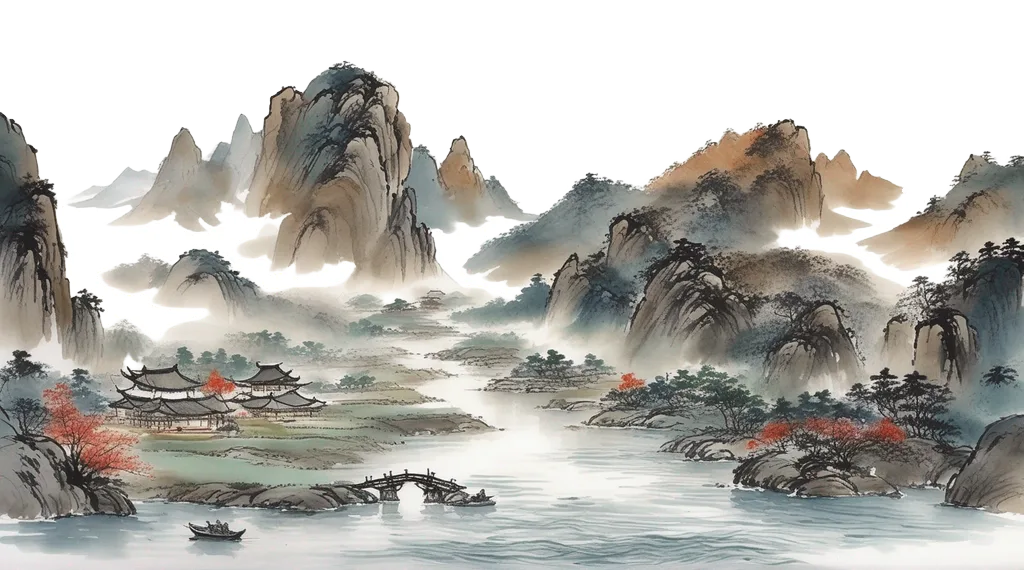
Romance of Five Kingdoms is a romantasy wuxia game. It is unapologetically dramatic, and the systems, lore, and culture are all bent toward a specific cluster of tones. Knowing the themes the game is reaching for will help you write a character who feeds into them rather than fights against them. None of this is a checklist; pick what speaks to you. But if your character touches none of these, you may struggle to enjoy yourself.
Wuxia
The bones of the game are wuxia. Wandering martial heroes, codes of honor, sect rivalries, secret techniques carried from one master to the next, breathtaking duels on rooftops and in bamboo groves. Style matters as much as outcome.
Cultivation
Cultivation is the preoccupation of most PCs, to grow ever stronger in their martial and supernatural abilities through practice, meditation, and refinement of pills. Some even take a strategic approach to romantically powered cultivation. Cultivation is the main progression mechanic in the game, and wanting to enhance your qi and learn new techniques provides a strong driver for your character to do things. As long as your character cares about cultivation it should generally be easy for you to have reasons for them to get involved in the game’s systems and with other PCs.
Adventure
The empire is large, varied, and mostly underexplored by any one character. There are spirits in the rivers, monsters in the high passes, ruins under the rice terraces, smugglers in the Zhūwān harbours, and trains that will take you somewhere you have never been by morning. The world of the game is vast and one of the main themes involves going out into the wilderness of the Jianghu and having wild martial artist adventures, whether those are battling monsters or solving mysteries.
Action
Many of the game’s systems feature high octane action, from stealthy heists, to epic battles or frantic chases. In combat characters can be fighting groups of enemies and leaping from tree branch to tree branch while a group of thugs fire machine guns at them from below.
Noble Intrigue
Your character is a Prince or Princess of one of the royal houses, as well as likely having loyalties to their martial school and perhaps one or more sects as well. This is part of the fantasy of the setting, you’ll go to fancy balls, wear absurdly expensive outfits, scheme and plot over expensive teas and whiskeys and work to dominate others through superior social maneuvering as much as martial footwork. In the high reaches of society a well placed backhanded compliment does more damage than a well placed backhand. Both the upsides of the royal fantasy, extravagance and importance, and the downsides of the fantasy, duty, obligation, are part of the setting.
Forbidden Romances
With most marriages being arranged and qi growing stronger the more opposed you are to your romantic interest the setting strongly encourages romances which are forbidden or between enemies or rivals. The friction between who you want and who you should pursue is core to the theme and plays out in long, slow burning flirtations that often ultimately explode in qi-unleashing passions. While romantic obstacles like this are common in Romance stories they are unusual in RPGs, and it’s worth thinking about how your character will interact with these themes.
Advice
This setting is a whimsical, high fantasy action-adventure romantasy setting. It isn’t grimdark fantasy, nor western dungeons and dragons style fantasy, or a comedy setting. If you try and play a character that doesn’t suit the theme you’re unlikely to have a good time. The best characters will all involve elements of martial arts cultivator, adventure, noble, and romantic lead. How you combine those elements or spin them is up to you. While there are no rules against making for instance a character disinterested in adventure, or in romance you will be locking yourself out of significant amounts of the story and potentially end up battling the game’s mechanics in a way that is unlikely to be enjoyable.
help "aolang culture guide"for the cultural ground rules.help cultivationfor the mechanical and dramatic centre of the world.help sectsfor the orders, sects, and schools that organise most adventures.help kingdomsfor the five kingdoms and their distinct flavours.help honorificsfor the optional courtesies the empire uses to place friend, rival, senior, and junior.